| |
|
|
 |
| |
|
|
 |
 |
 |
| |
|
|
 |
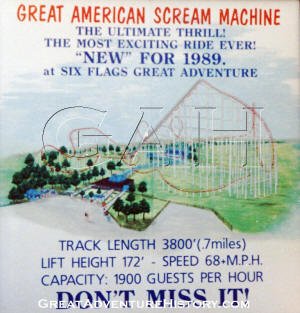
During the 1987 season, Six Flags began planning
to add the world's tallest and fastest roller coaster, with a then
unheard of seven inversions. After a spring and summer of bad
publicity for the park and declining attendance, a last minute change in
plans shifted the construction of the Arrow Dynamics designed Shockwave
roller coaster to Six Flags Great America in Gurnee, Illinois for the
1988 season instead.
Great Adventure instead would introduce the Condor and Bugs Bunny Land
for the 1988 season in an effort to rebuild the park's family image, but
towards the end of the season, the Sarajevo Bobsled roller coaster was
closed and removal began in preparation for the Great American Scream
Machine's construction.
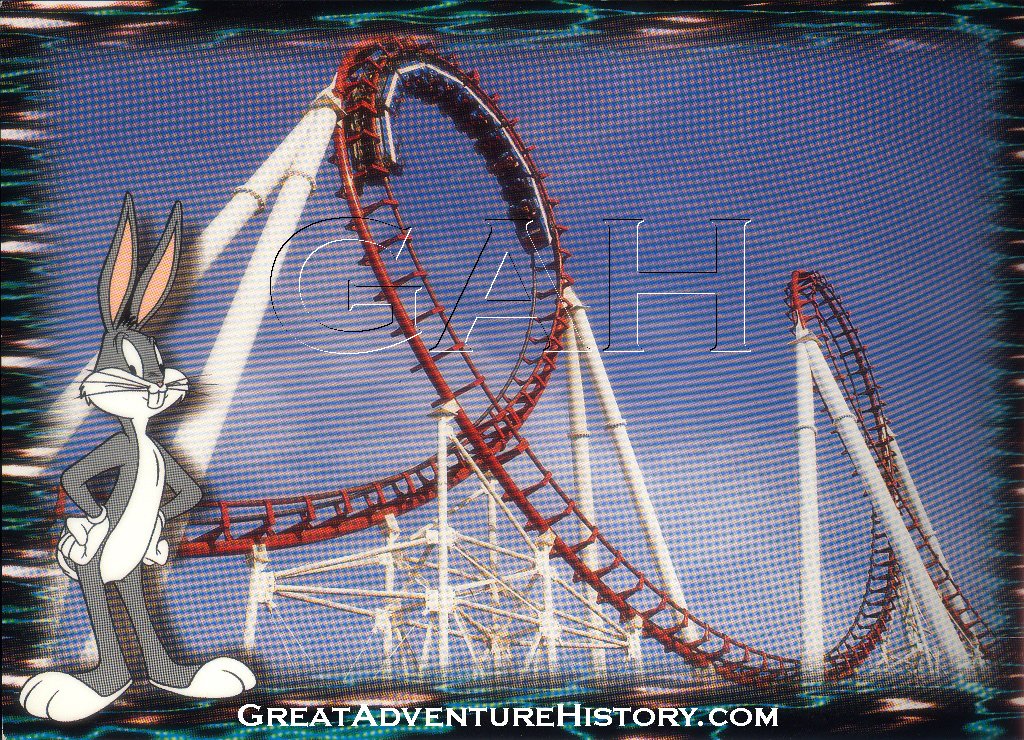
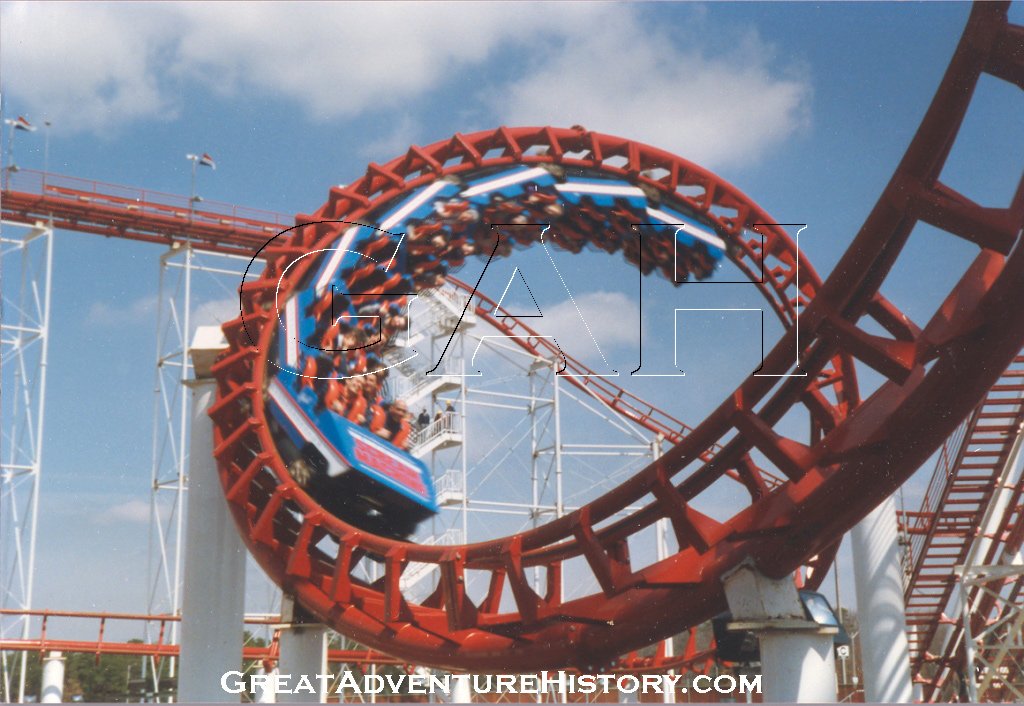
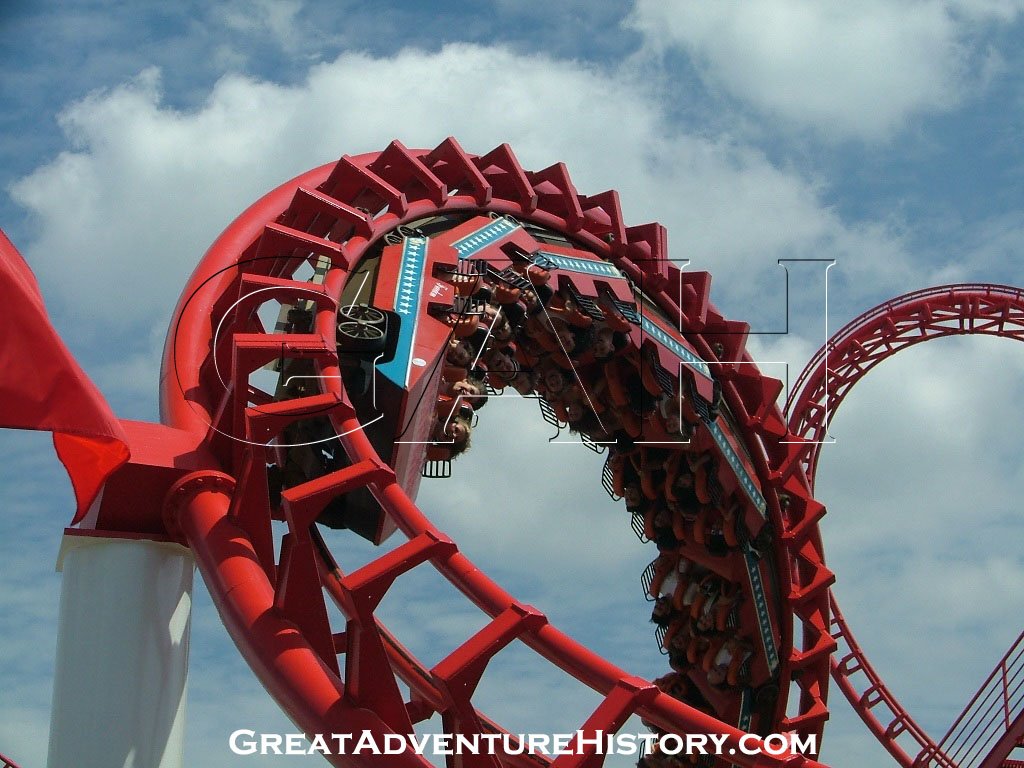
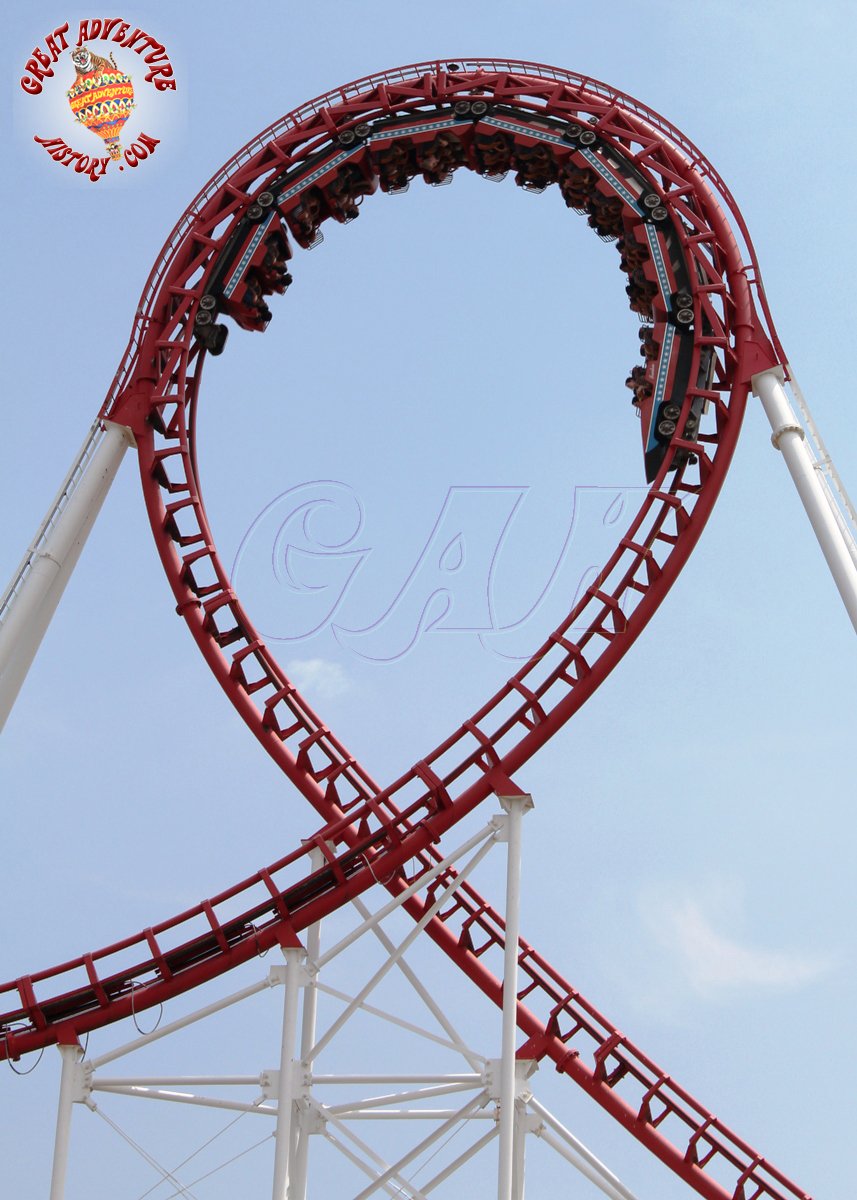
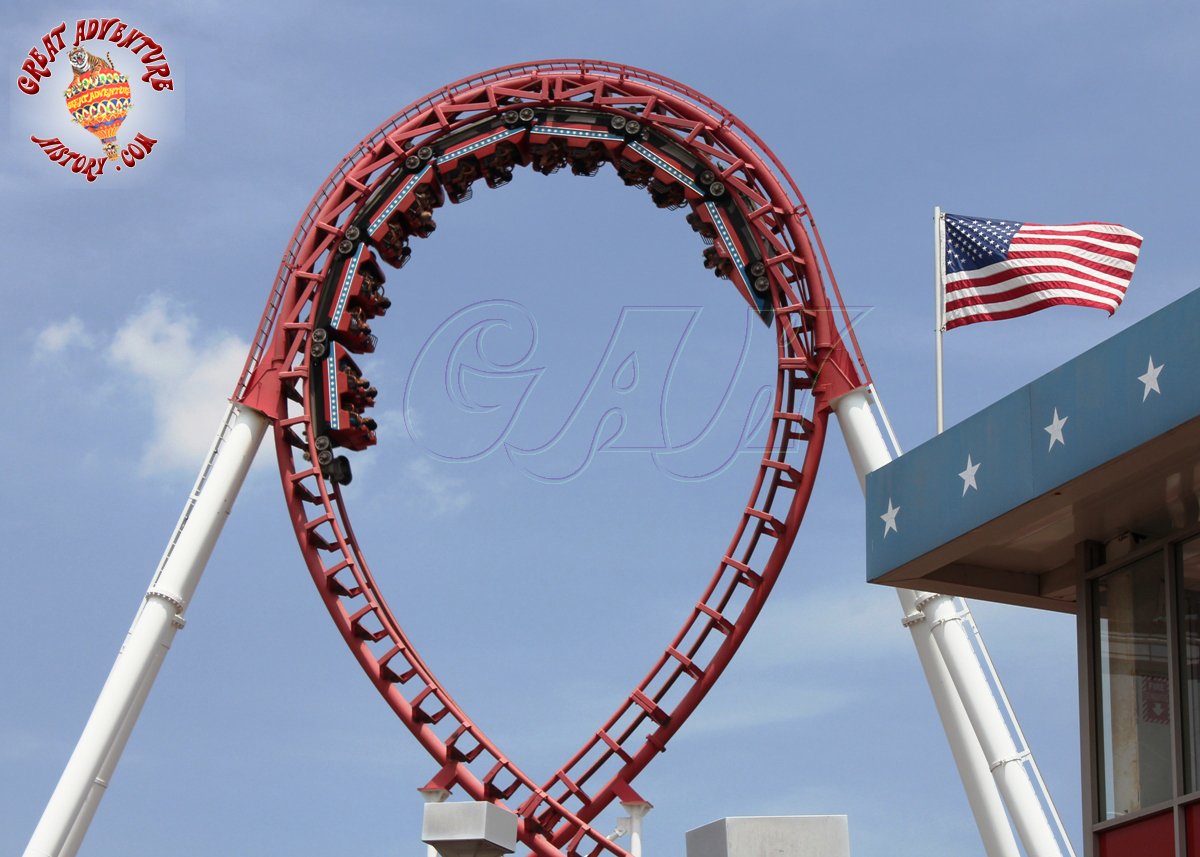
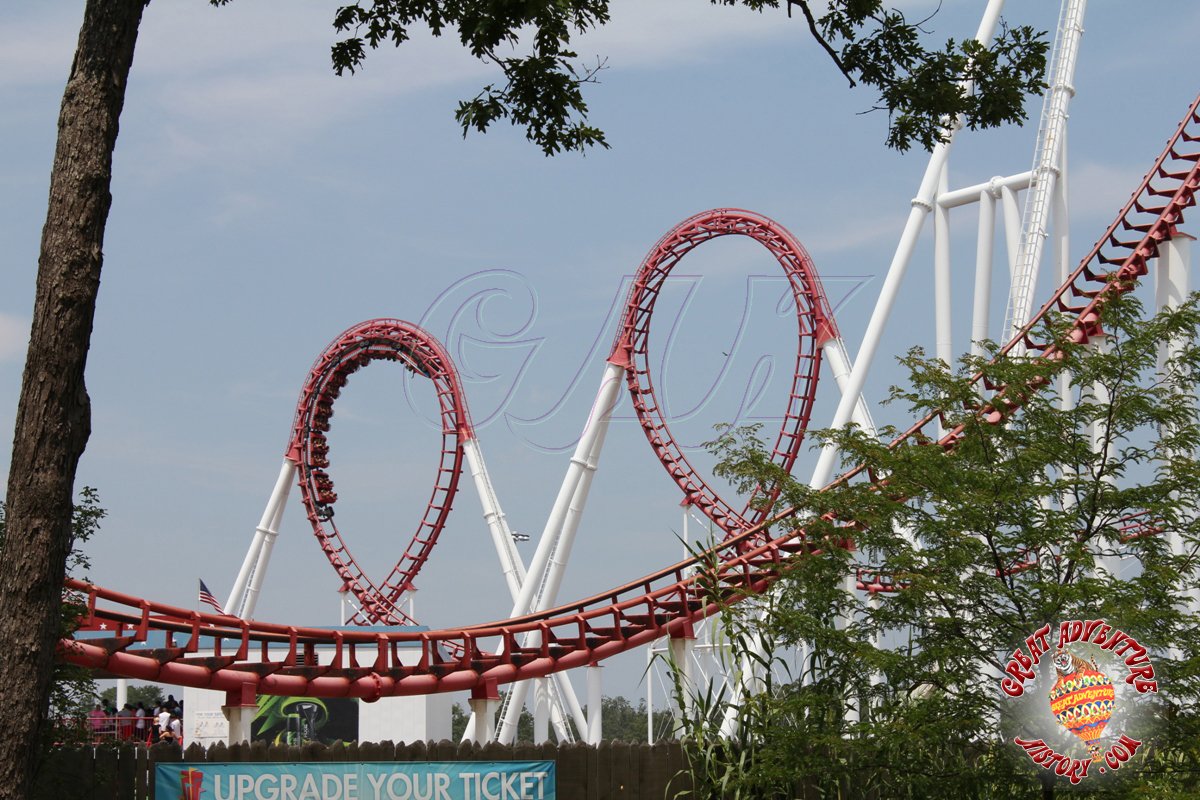
The Great American Scream Machine would take the record from Shockwave
as the world's tallest and fastest coaster, featuring the same design as
the Shockwave, but built a few feet taller. In addition, the
coaster improved on the Shockwave design with the configuration of the
track in and out of the third vertical loop changed. On Shockwave the
trains entered the loop on the right and exited on the left - this made
the climb up to the mid- course brake run tight and uncomfortable for
riders. Scream Machine's third loop was updated to enter from the left
and exit from the right so the transition could be made a little
smoother.
Originally, the plan was to name the Scream Machine the "Ninja" as part
of a company wide wave of similar multi-element coasters with the same
name, using the same logos, merchandise, and even advertising with their
similar looking profiles. After problems with the crowds
drawn to the Ninja coasters in other parks, a decision was made to go
with a more generic name, and then park president Ray Williams who had
come to Great Adventure by way of Six Flags Over Georgia, which has the
original Great American Scream Machine, and Six Flags Great America drew
on the patriotic themes for the new coaster.
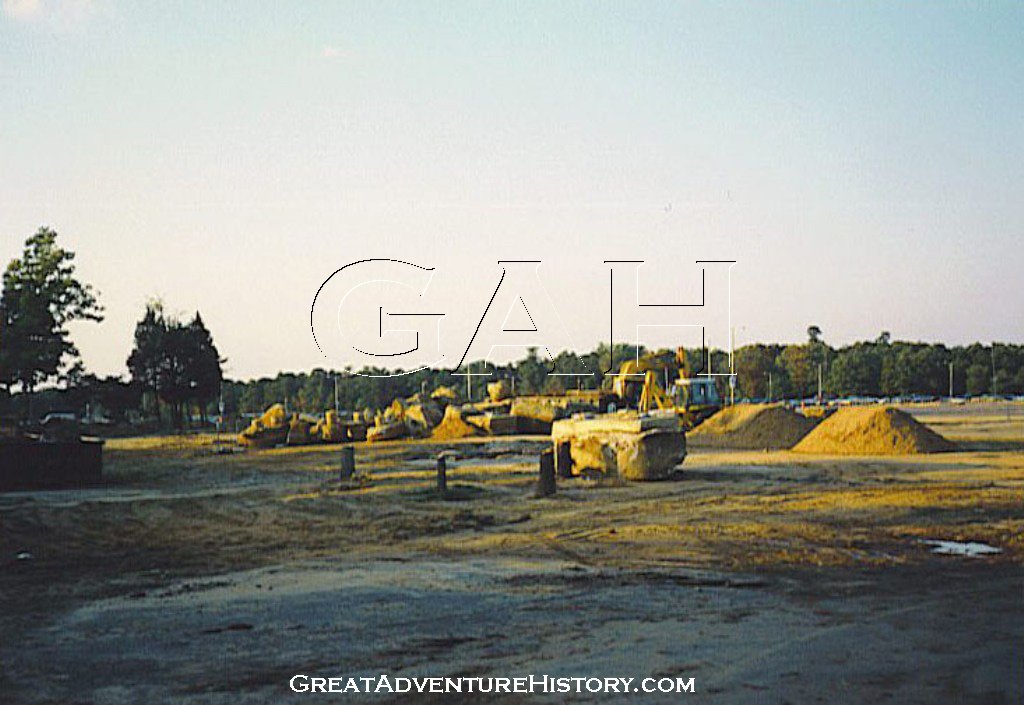
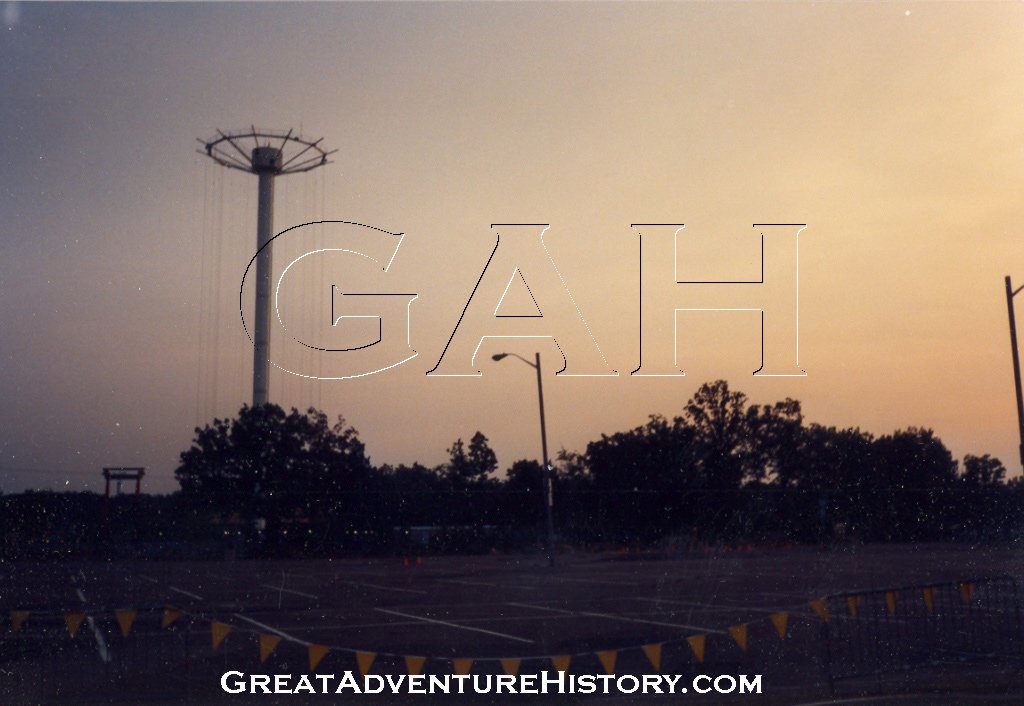
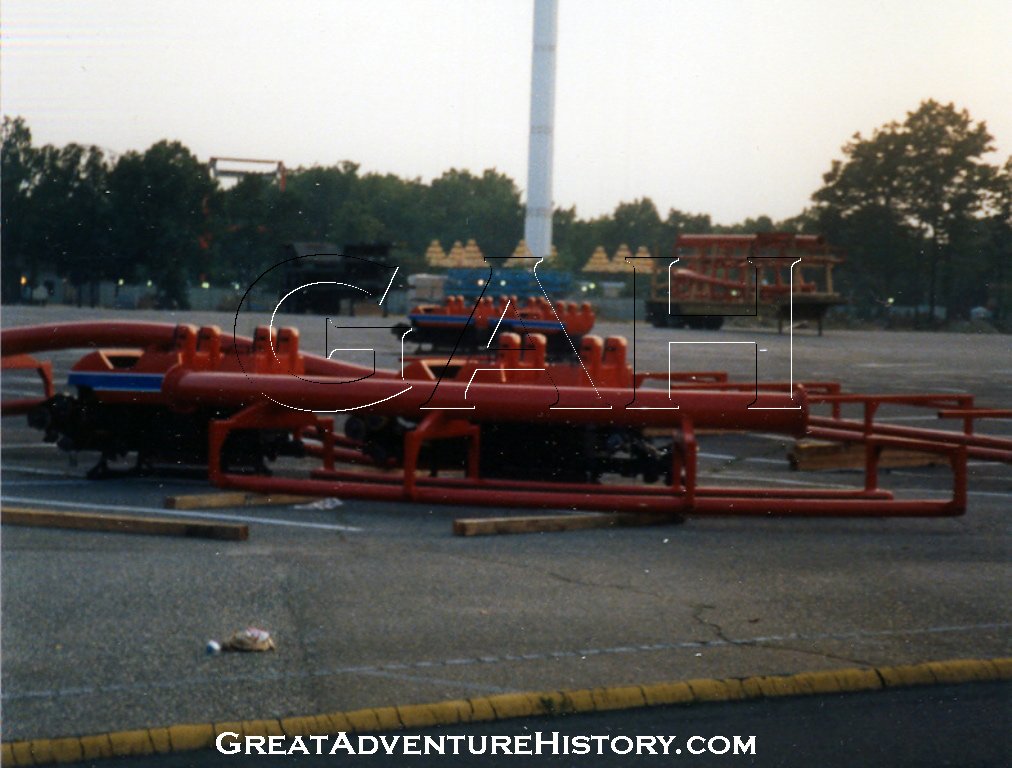
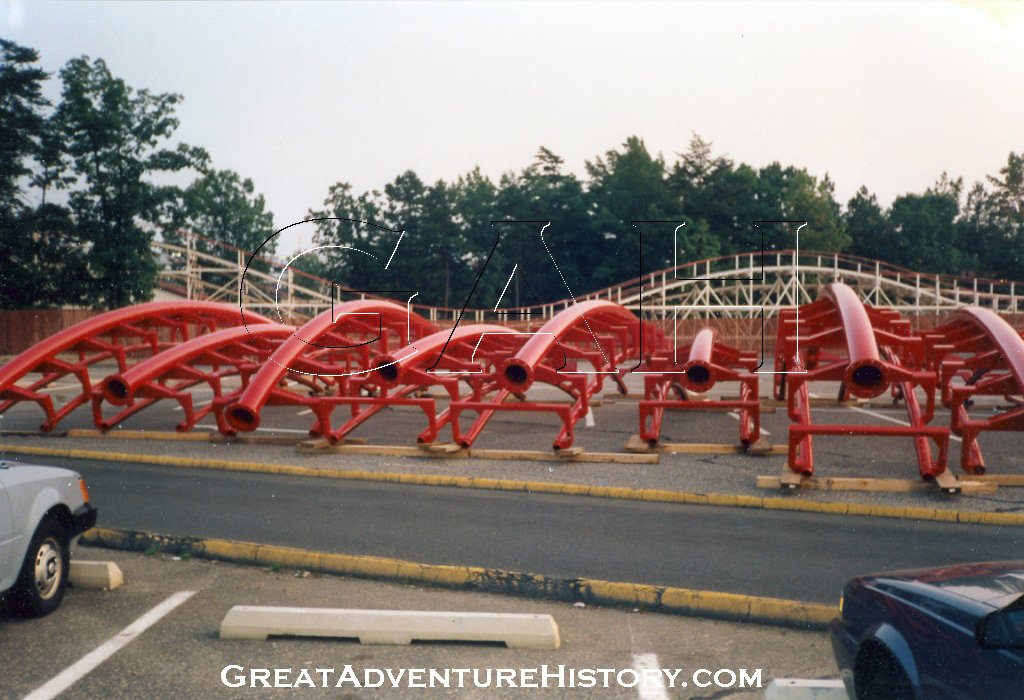
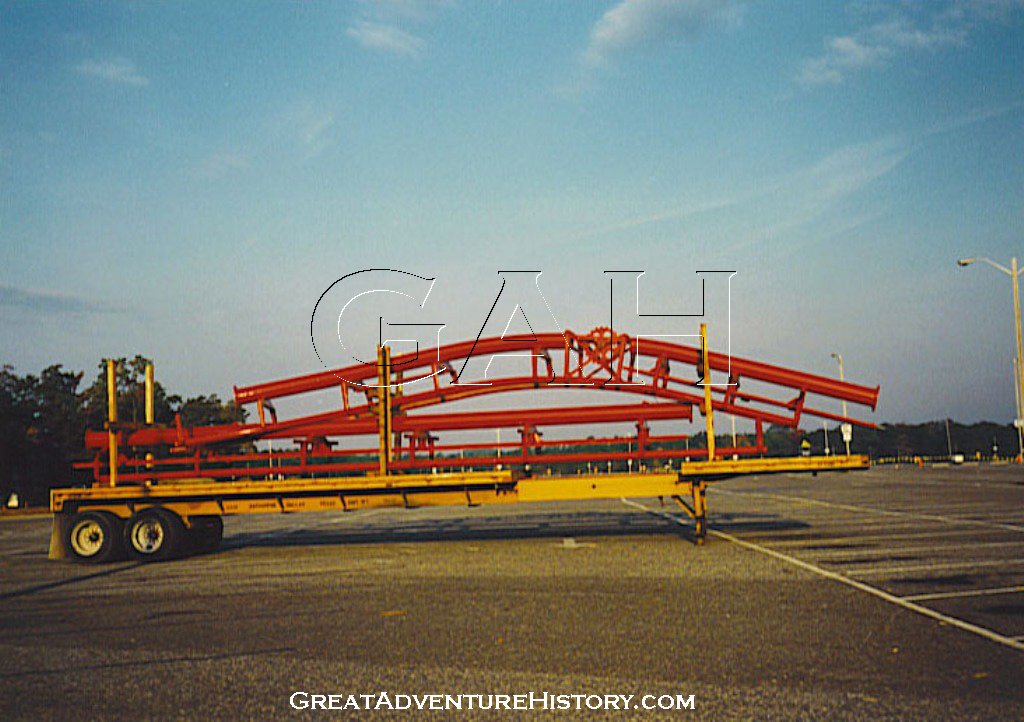
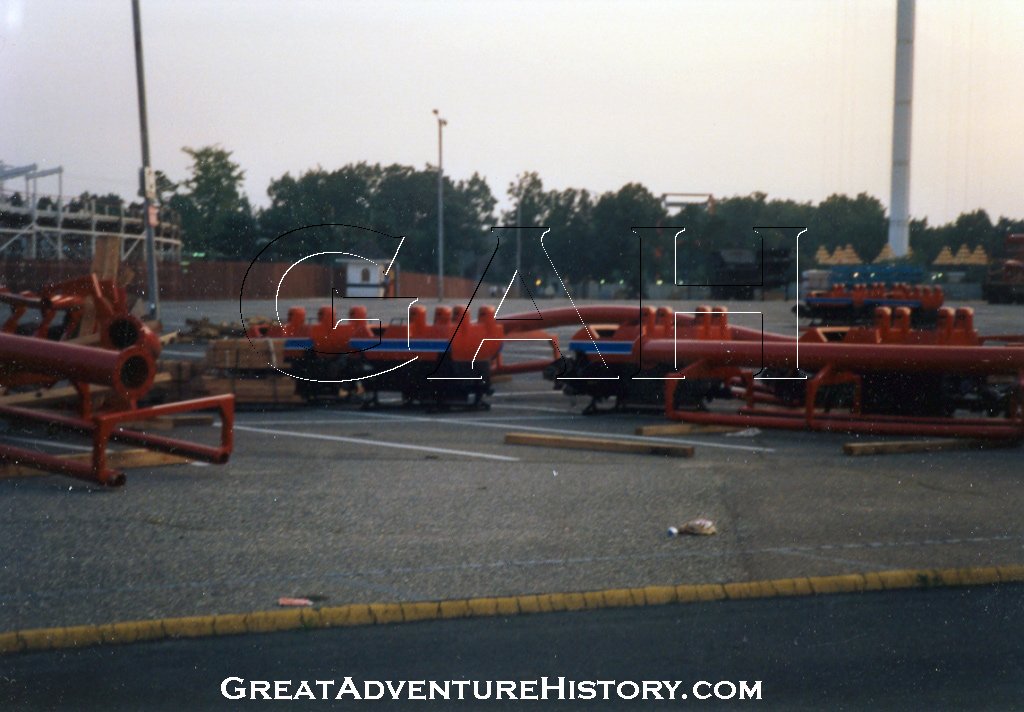
As the removal of the Sarajevo Bobsled continued, a section of the
parking lot became the staging area for the sections of track, supports
and trains. The parking lot would become home to the
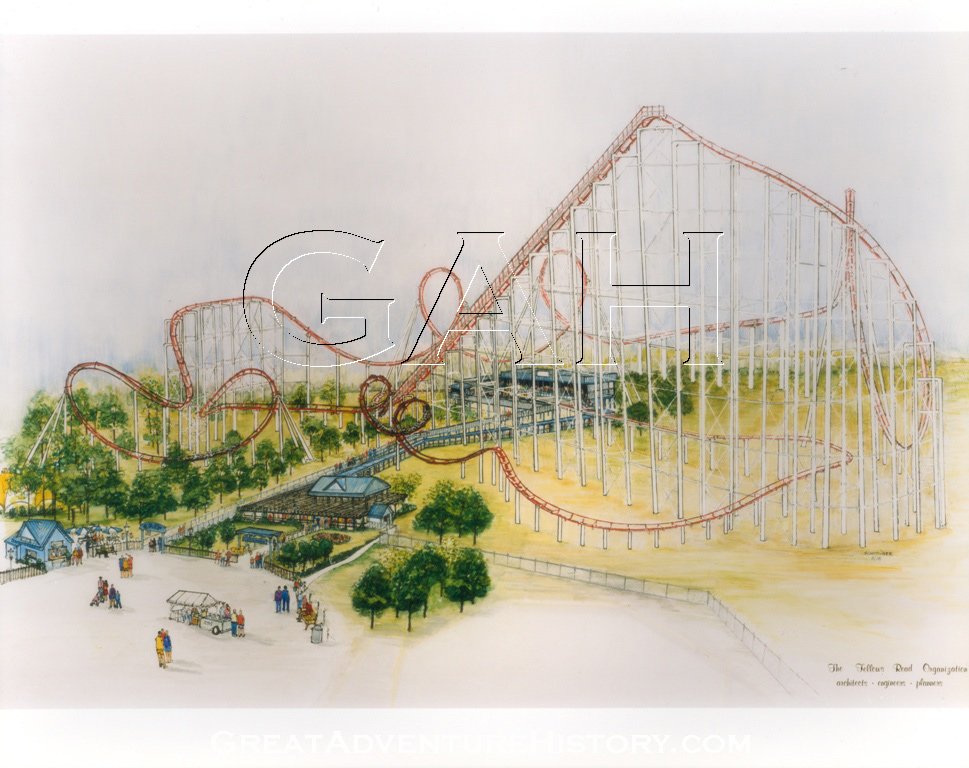
coaster. Original plans had the
Sarajevo Bobsled's station being re-used as part of the main
queue house, and is depicted that way in the renderings. However, so
much of the structure had to be disassembled to remove the Bobsled's
computers the idea was dropped. |
 |
| |
|
 |
 |
| |
|

 |
 |
| |
|
 |
 |
| |
|
 |
 |
| |
|
 |
 |
| |
|
 |
 |
| |
|
|
 |
 |
 |
| |
|
|
 |
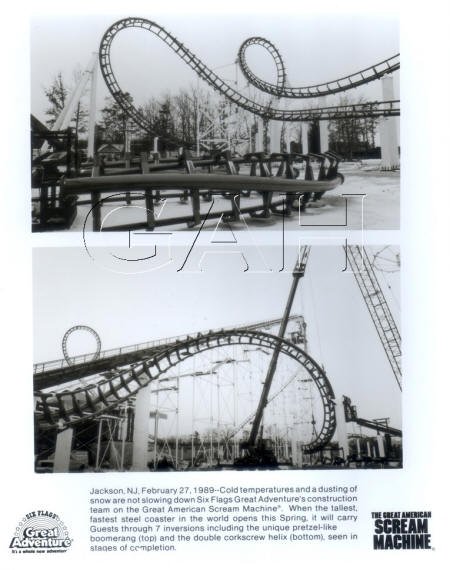
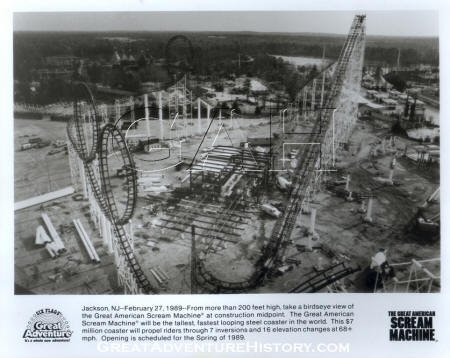
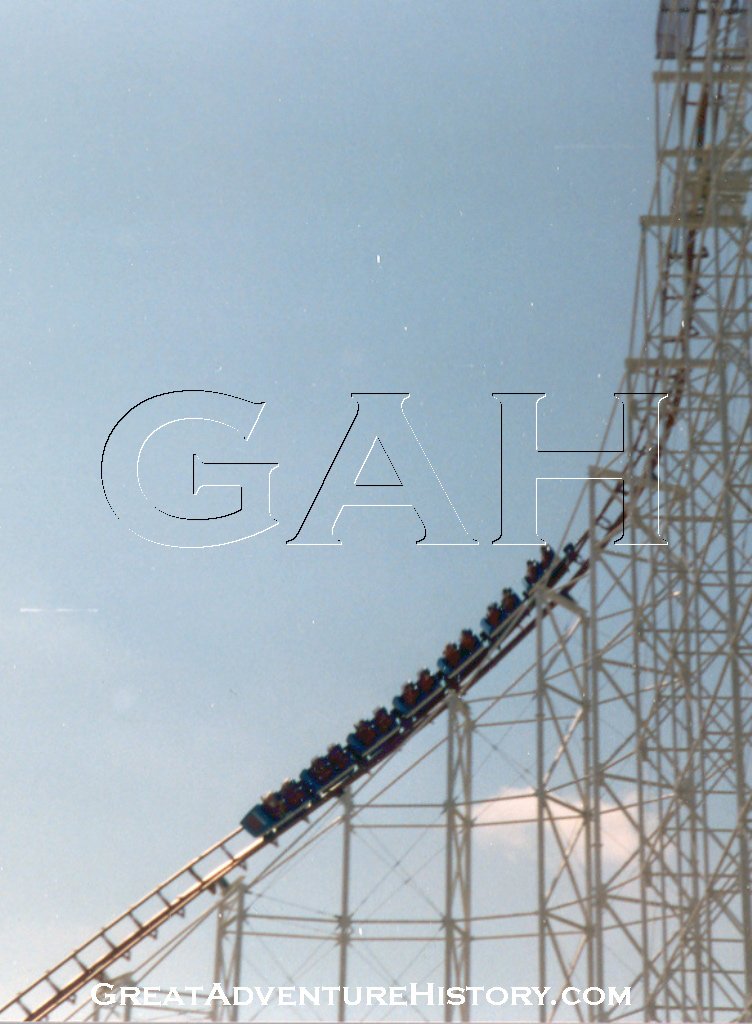
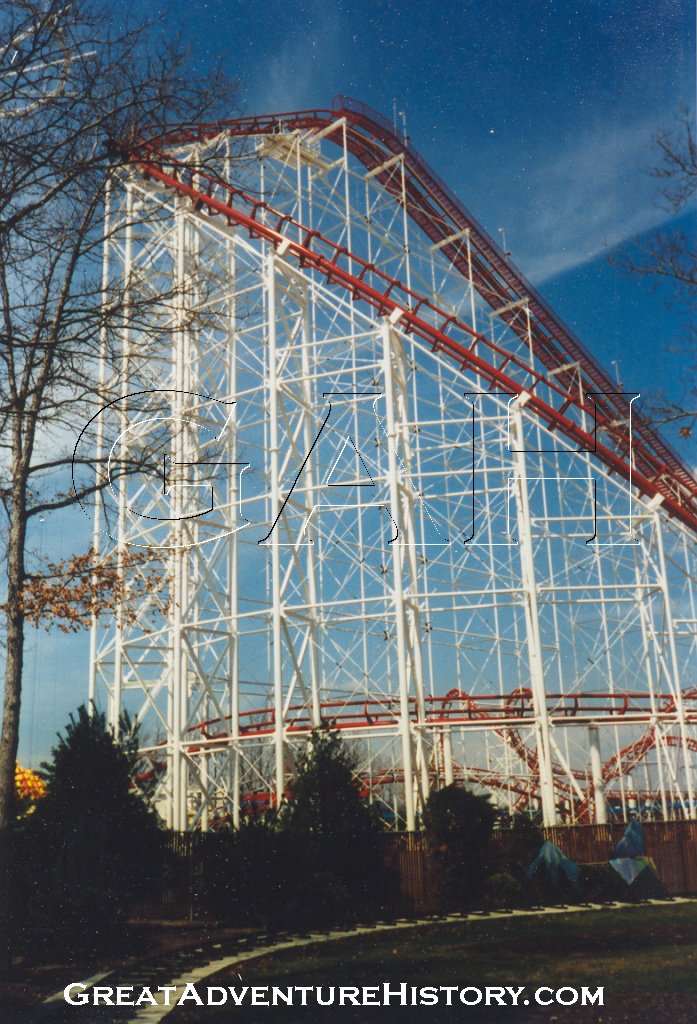
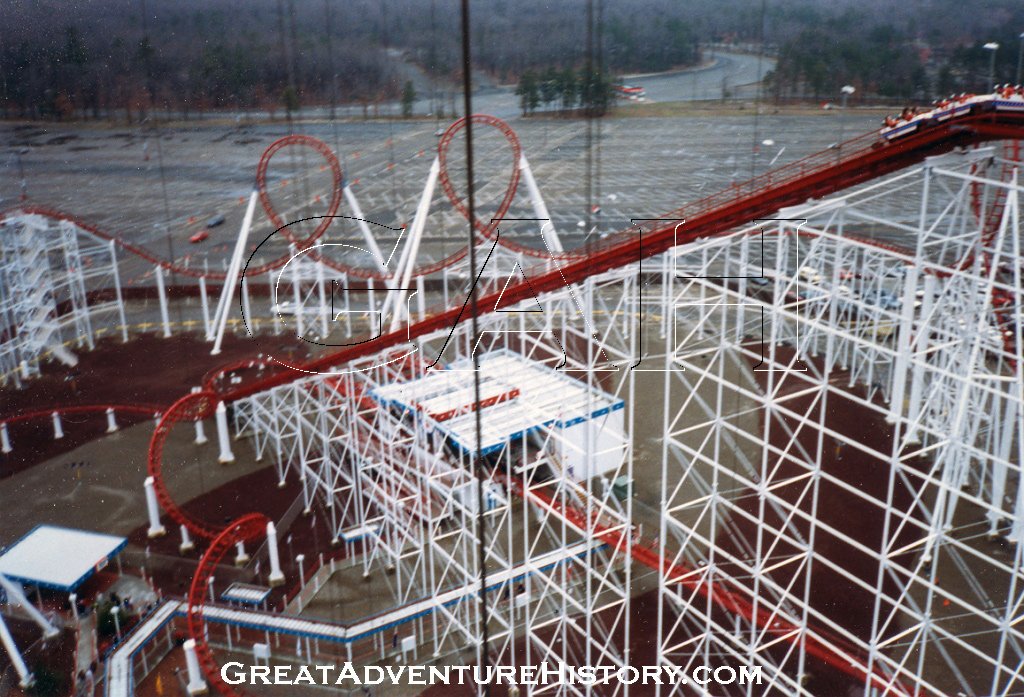
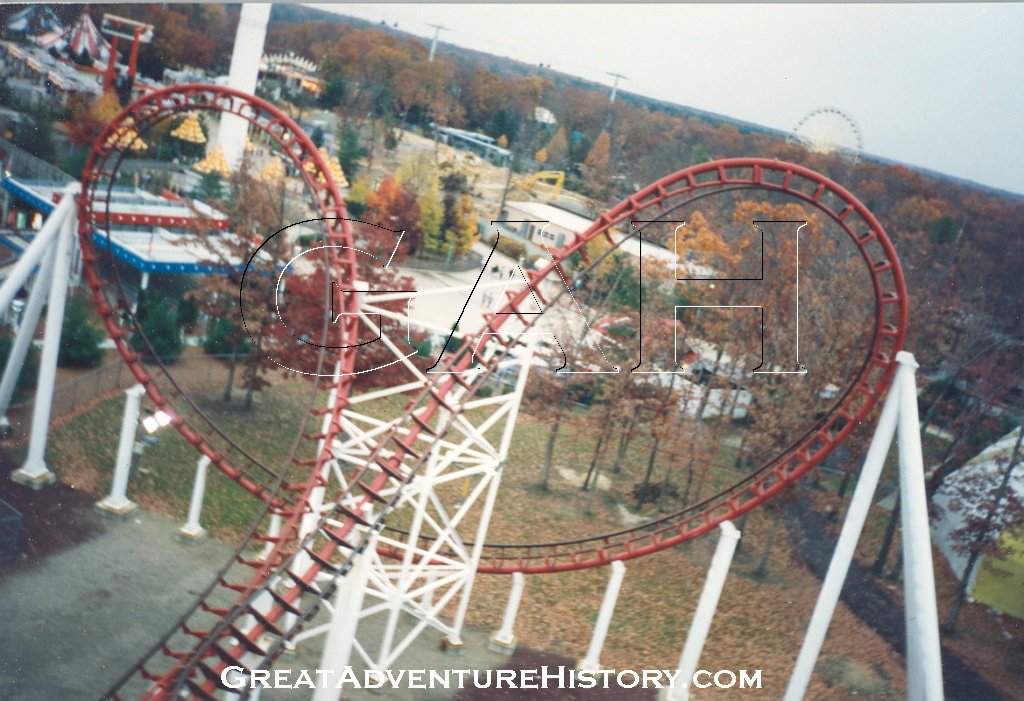
As the fall and winter went on, the Scream Machine
rose up above the park skyline, offering a tantalizing view above the
trees and down the park's exit road.
As the spring arrived, work
continued trying to get the ride ready for opening day. With
delays caused by a very cold and snowy winter, the Great American Scream
Machine wasn't quite ready in time for the park's opening day.
The structure was completed, but final installation of supports and
welding continued, as well as work on the station and coverings for the
walkway.
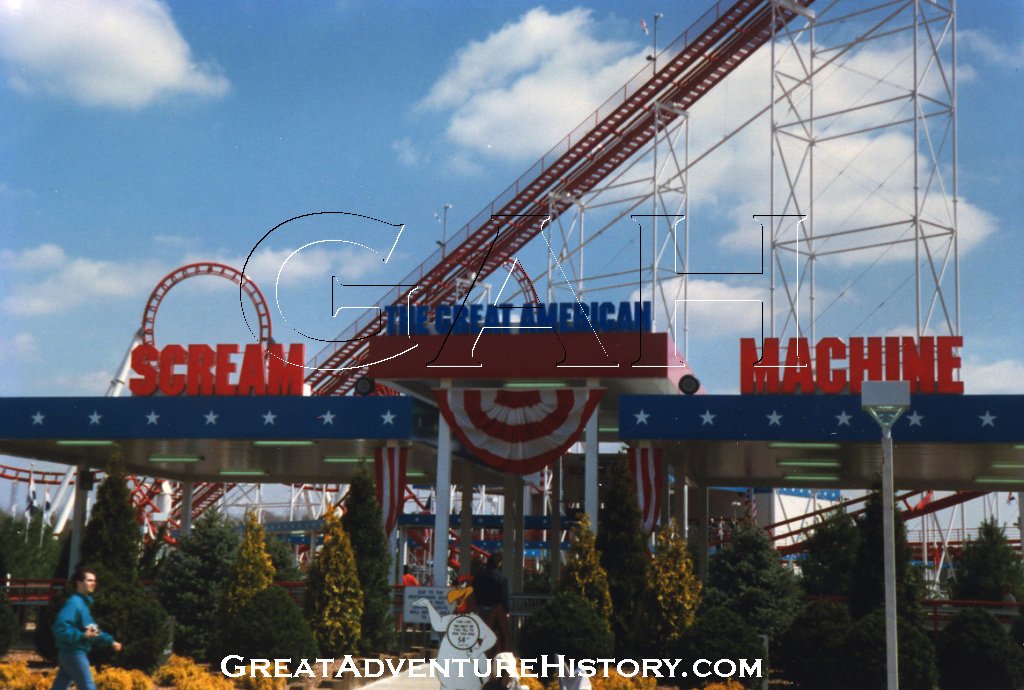
Finally, everything was ready for the media preview day on April 14th,
and ready for the general public on Saturday, April 15th. |
 |
| |
|
|
| |
|
 |
 |
| |
|
 |
 |
| |
|
 |
 |
| News release announcing the
Great American Scream Machine from September 29, 1988 |
 |
 |
| |
|
 |
 |
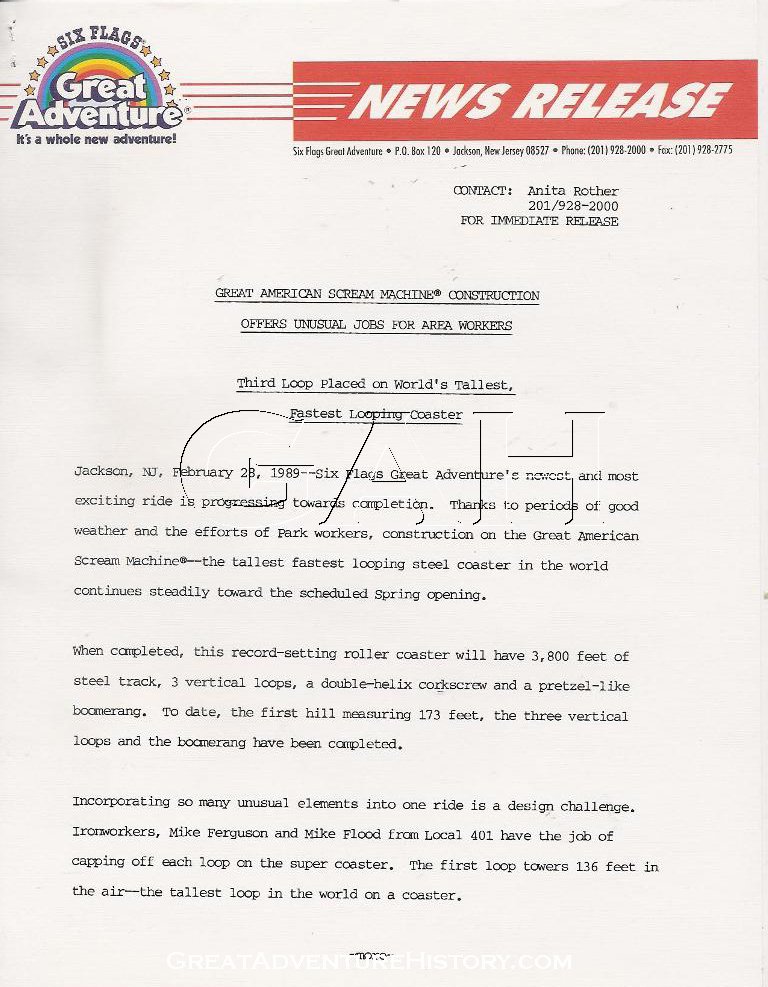
| News releases prior to the
rides opening from early 1989 |
 |
 |
| News releases from the Great
American Scream Machine media day press kit |
 |
 |
| News
releases from the Great American Scream Machine media day press
kit |
 |
 |
| News releases from the Great
American Scream Machine media day press kit |
 |
 |
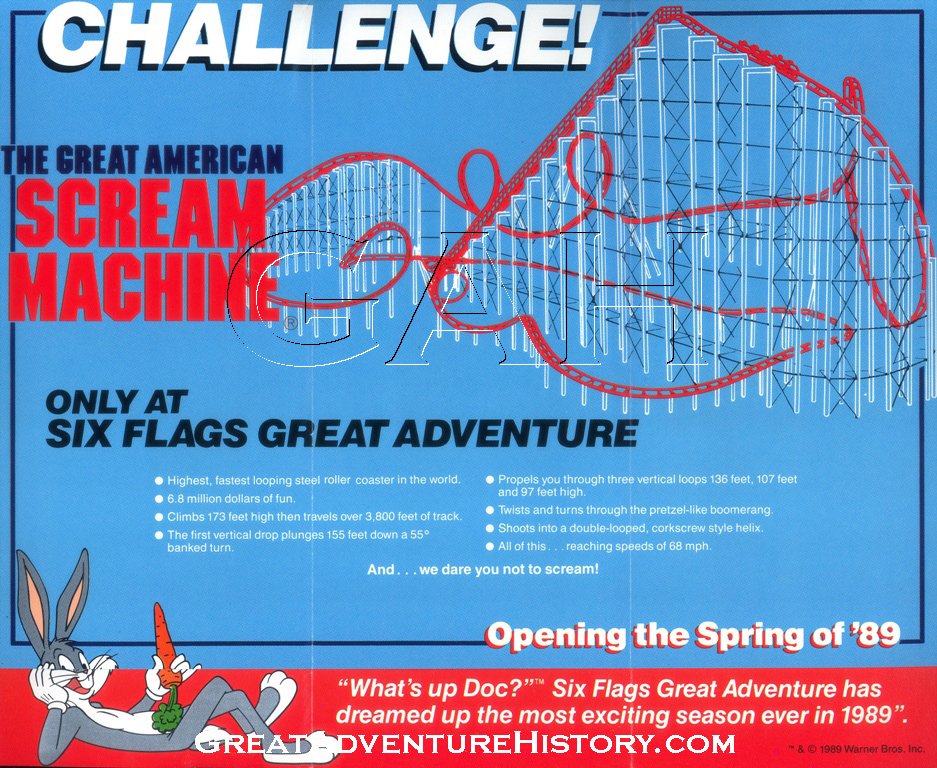
| |
Season Pass mailer |
 |
 |
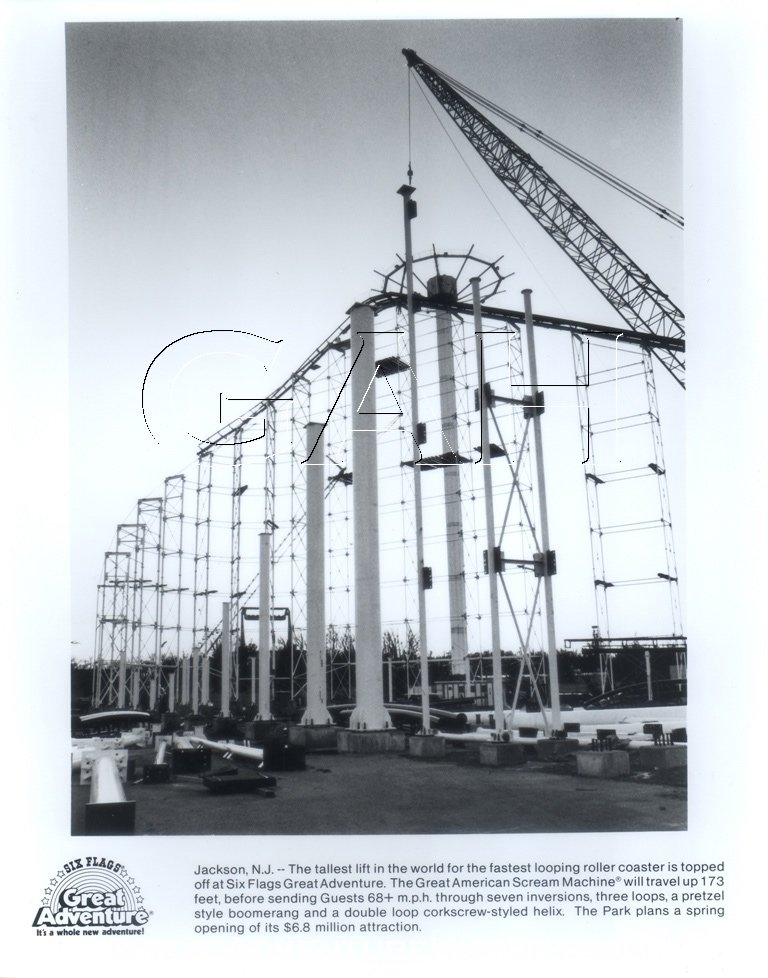
| Construction photos from the
park's PR Department |
 |
 |
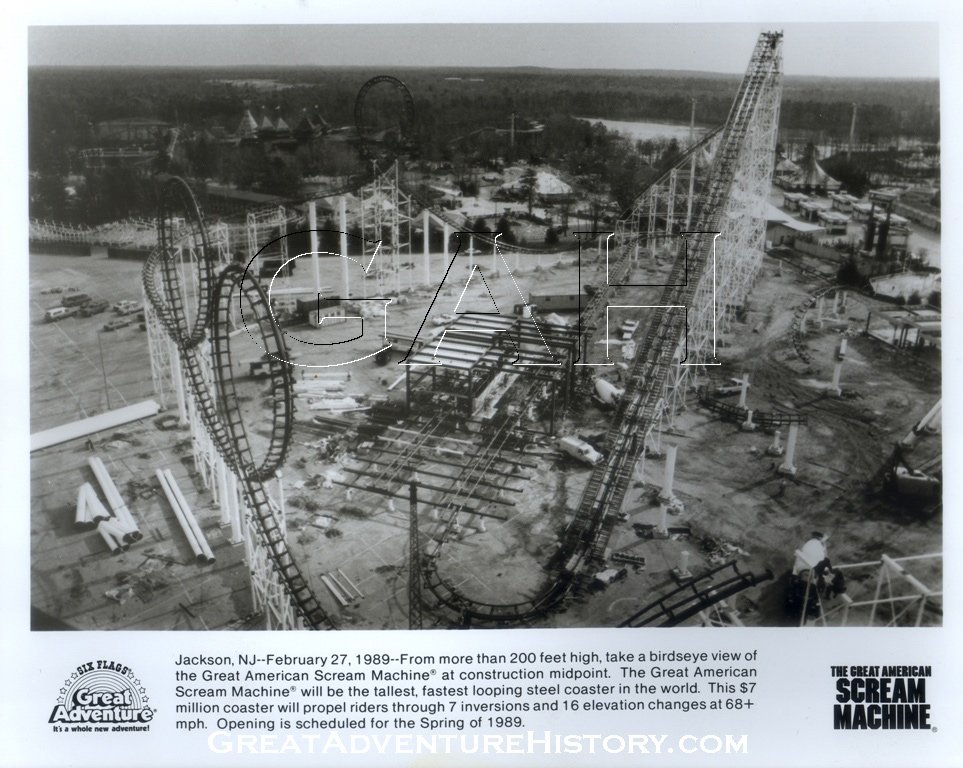
| Construction photos from the
parks PR Department |
 |
 |
|
Construction photos from the parks PR Department |

 |
| Park brochure from the 1989
season |
 |
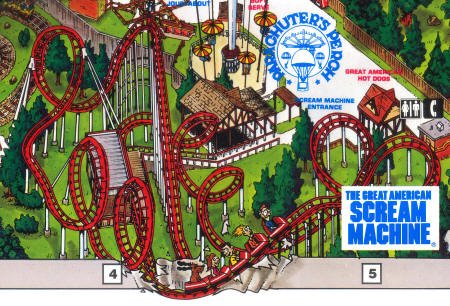 |
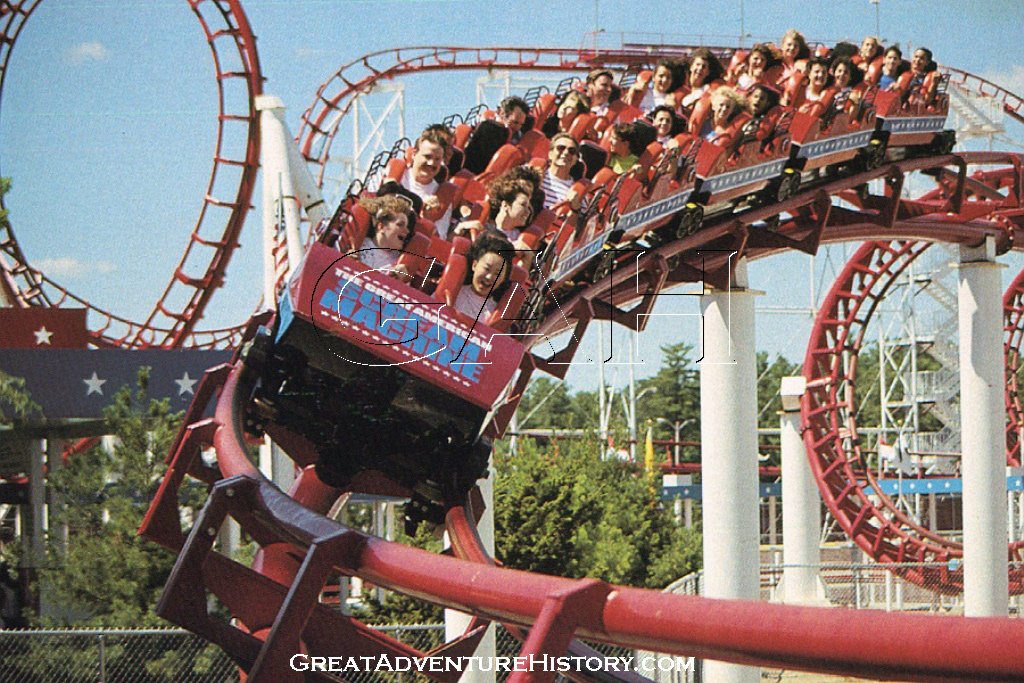
| Publicity photo |
The Scream Machine on
the 1989 map |
|

|
An
invitation to the Great American Scream Machine Media Day along with the
ribbon from the ribbon cutting ceremony that officially opened the ride.
The Great American Scream Machine button was issued to all park
employees as part of their uniforms, and the "Red Badge of Courage"
button was given to some of the first riders. |
| |
|
|

 |

Preparations for the
media day continued literally to the last minute, with the landscaping
and queue elements going in the night before the media would arrive.
The final element added to the ride was a layer of decorative stone to
cover the pavement of the former parking lot. Bands of red
and white stone were placed in ribbons to look like a waving flag from
above.
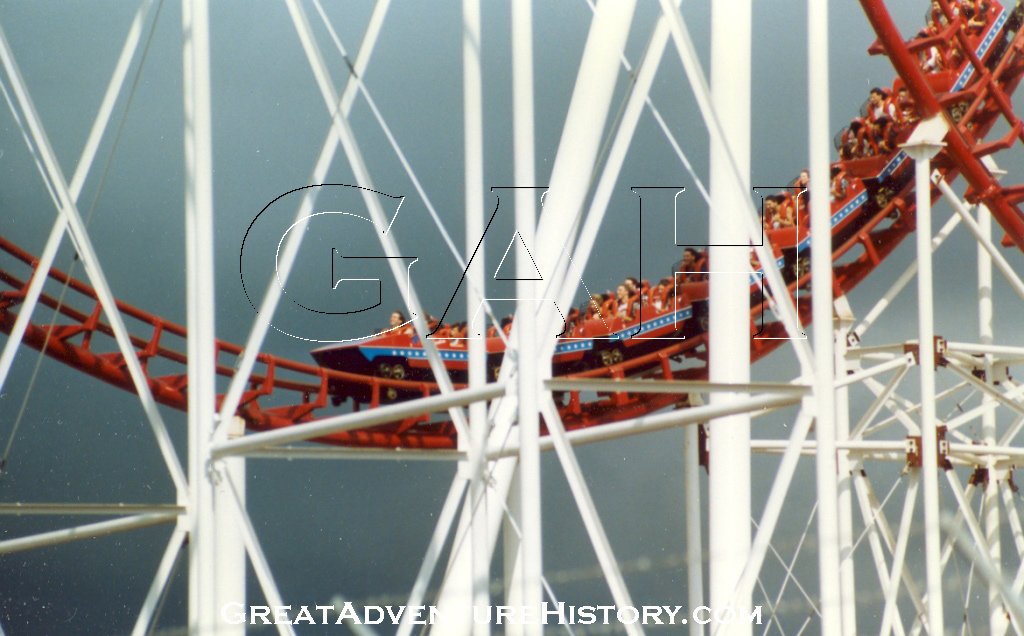
The weather was nearly perfect for the media day, with bright sunshine
though the temperatures were low. The new coaster gleamed in
the sunshine and wowed the media, making newscasts in New York and
Philadelphia that night, and national newscasts for weeks to come.
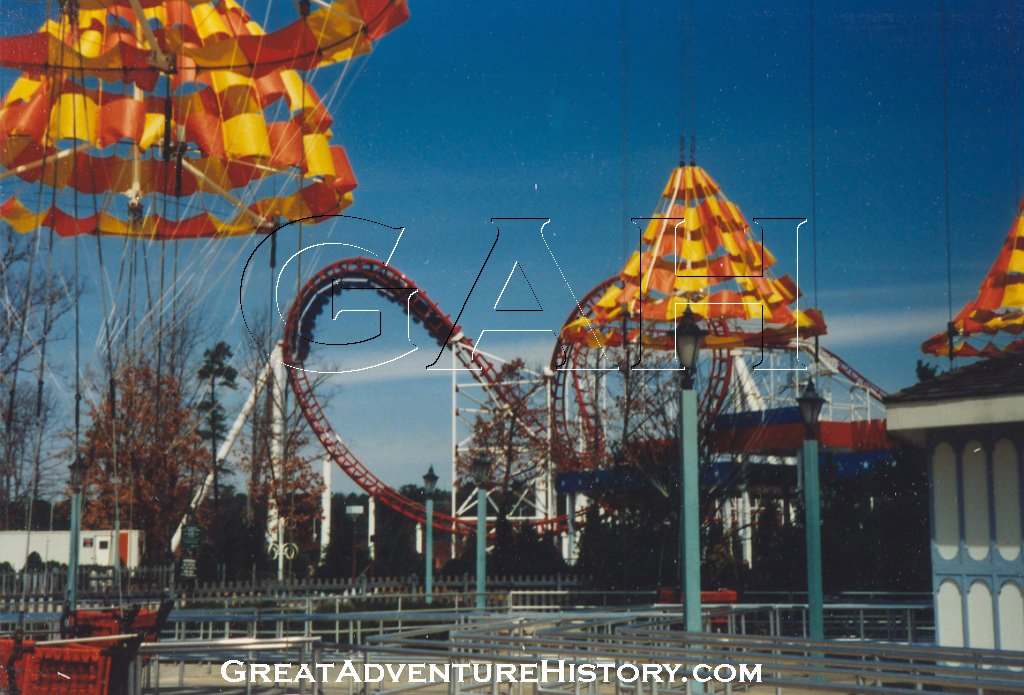
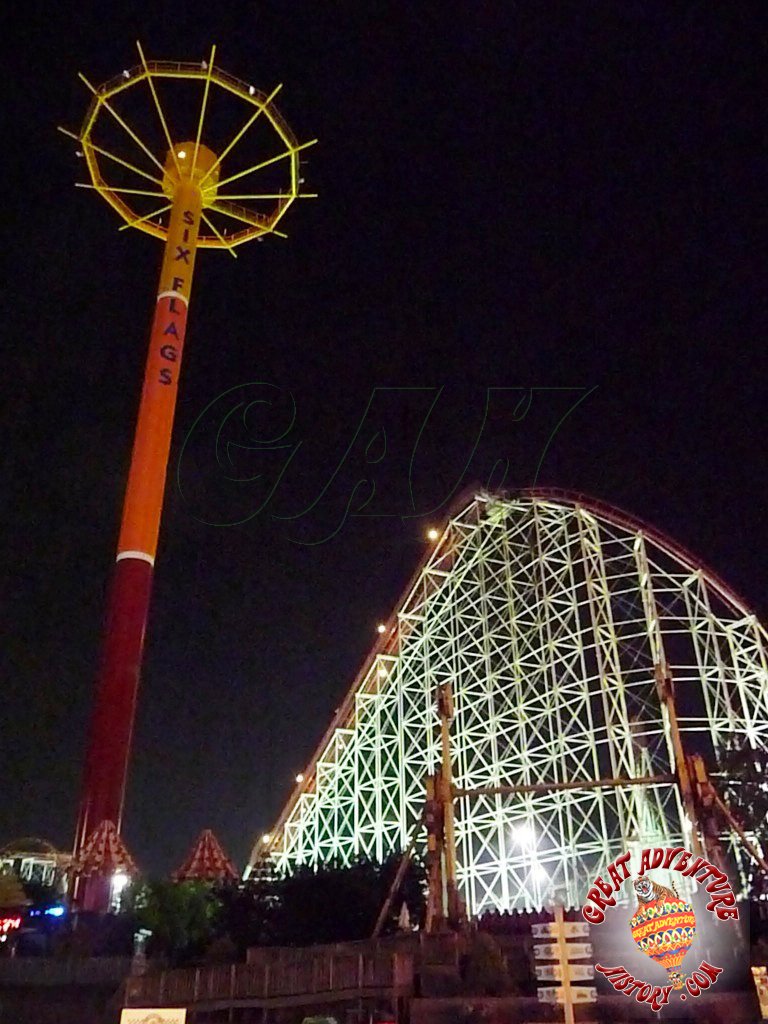
The neighboring Parachuter's Perch was a great vantage point for the
media and the chutes were manually positioned with camera crews aboard
to capture the ride from above.

The Scream Machine was the world's tallest and fastest roller coaster
from April 15, 1989 until May 6, 1989, when Cedar Point in Sandusky,
Ohio opened Magnum XL-200, the first coaster in the world to break the
200 foot height mark and breaking the record held by Great American
Scream Machine by 32 feet.
Despite losing the height and speed records, the opening of Magnum at
Cedar Point may have actually helped the Great American Scream Machine
with many new shows doing features on the new "roller coaster
renaissance" with both coasters getting airtime together as the world's
tallest and fastest coaster and tallest and fastest LOOPING roller
coaster. Side by side, the footage made Scream Machine look
better, since the media day footage was bright and sunny, compared to a
cold, dark and gloomy wintery-looking media day for Magnum.
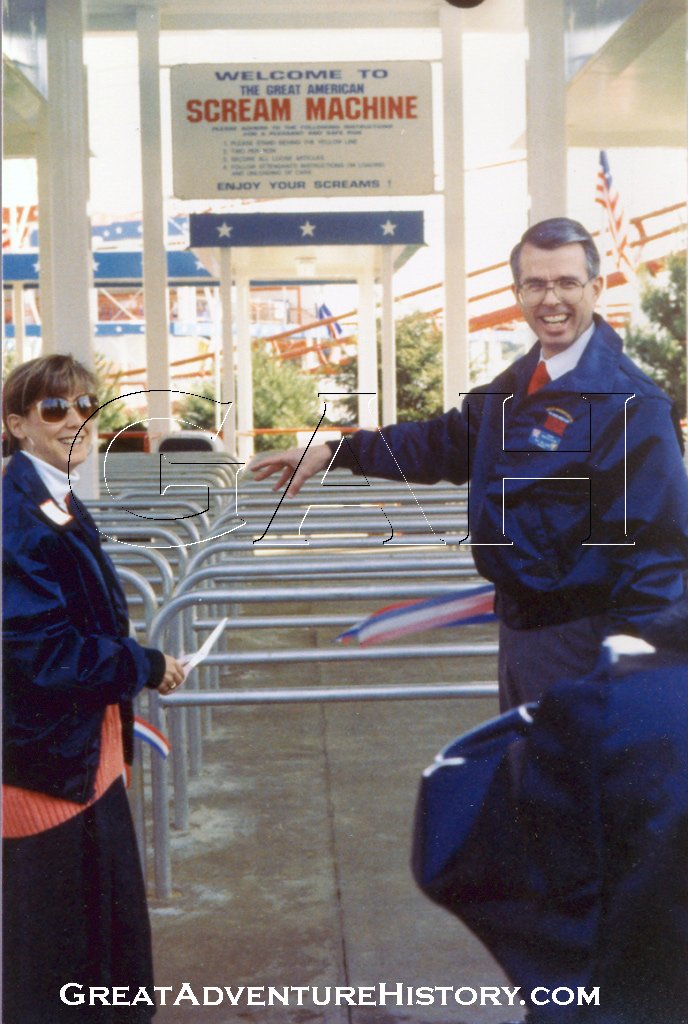
For the opening ceremony, park president Ray Williams cut the ribbon and
members of the American Coaster Enthusiasts rode over and over
throughout the day for the cameras as the media rode and toured the
ride. Camera crews were given hard hats and setup all
around the ride area, catching multiple angles of the dramatic first
drop and loops of what at the time was a very unique looking coaster.
In the coming weeks more camera crews would visit the park and film
segments for many news shows and a former astronaut was one of the guest
correspondents who rode the Scream Machine and described the ride
comparing the maneuvers to those used by fighter pilots.
One of the more unique features of the ride when it first opened was the
red, white, and blue running lights imbedded in the floor of the ride
station between the air gates and track that displayed random lighting
sequences as the air gates opened and closed and as the trains arrived
and departed. Foot traffic over these lights by guests boarding the
trains quickly covered them with dirt and these became impossible to
maintain. Within weeks the lights were removed and silver metal filler
panels were installed to replace the lighting fixtures.

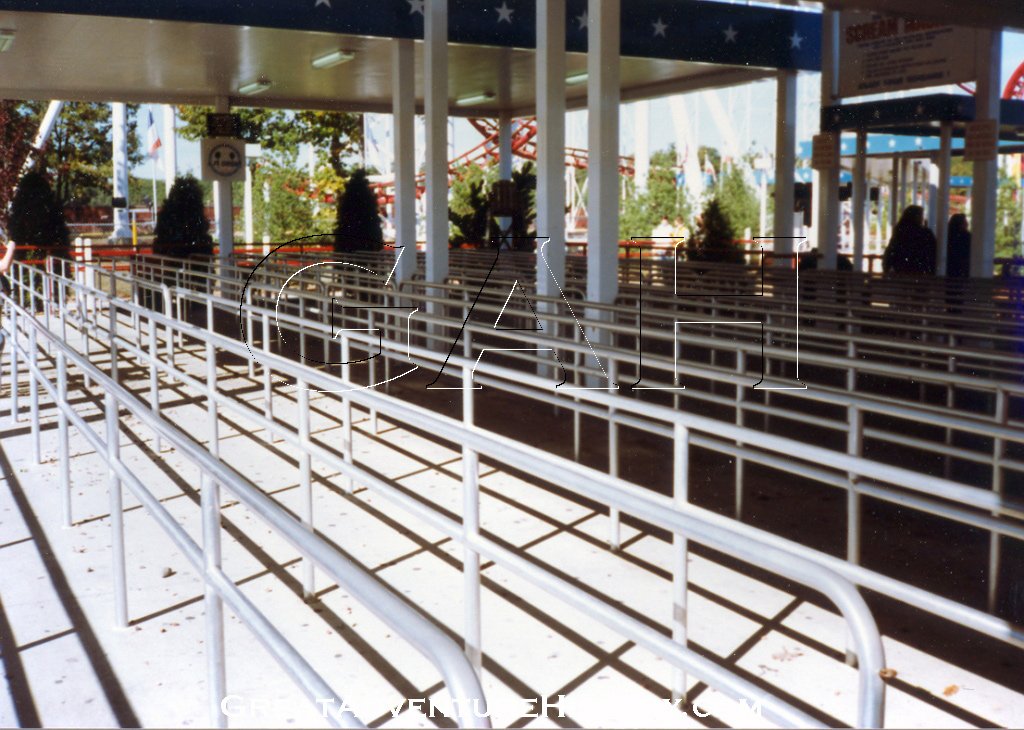
The Great American Scream Machine proved to be hugely popular, filling
the enormous queue line and building and spilling out into the walkway
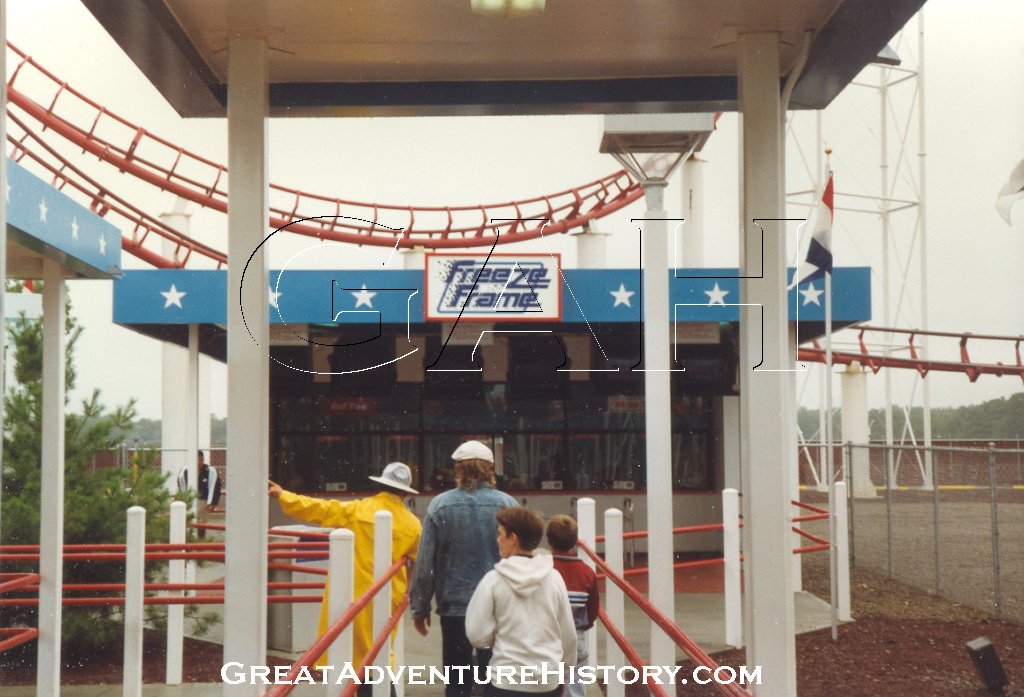
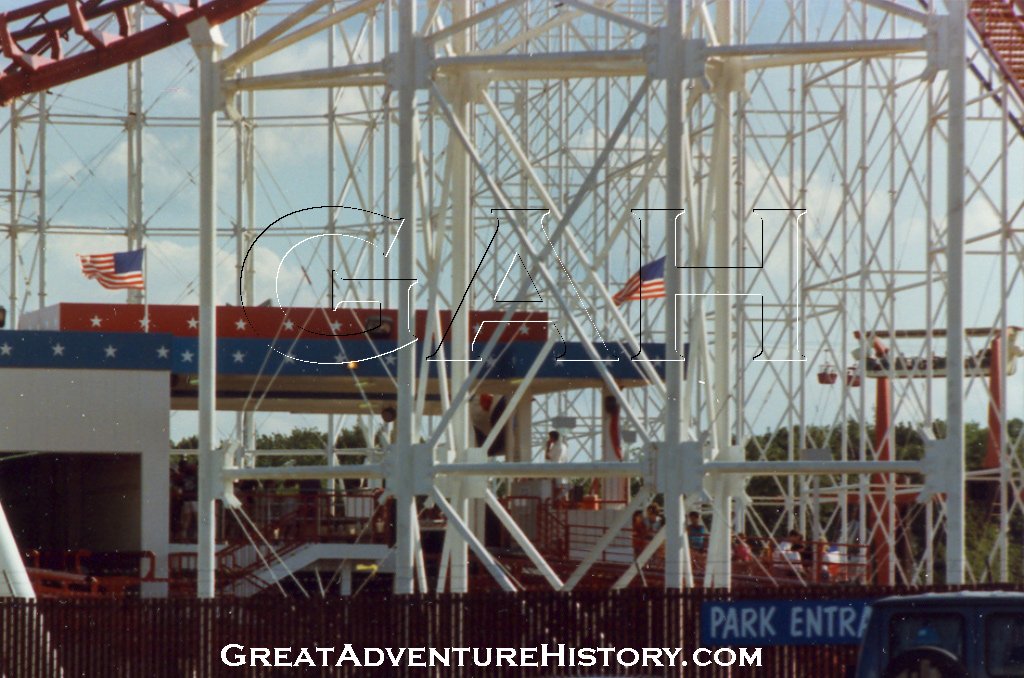
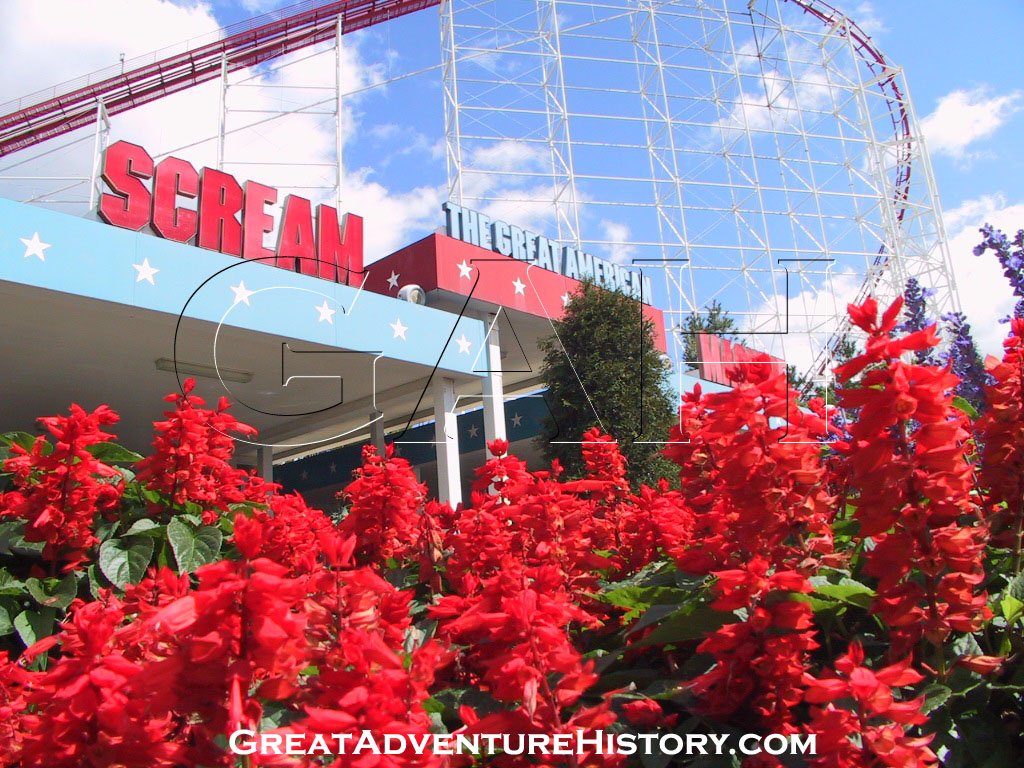
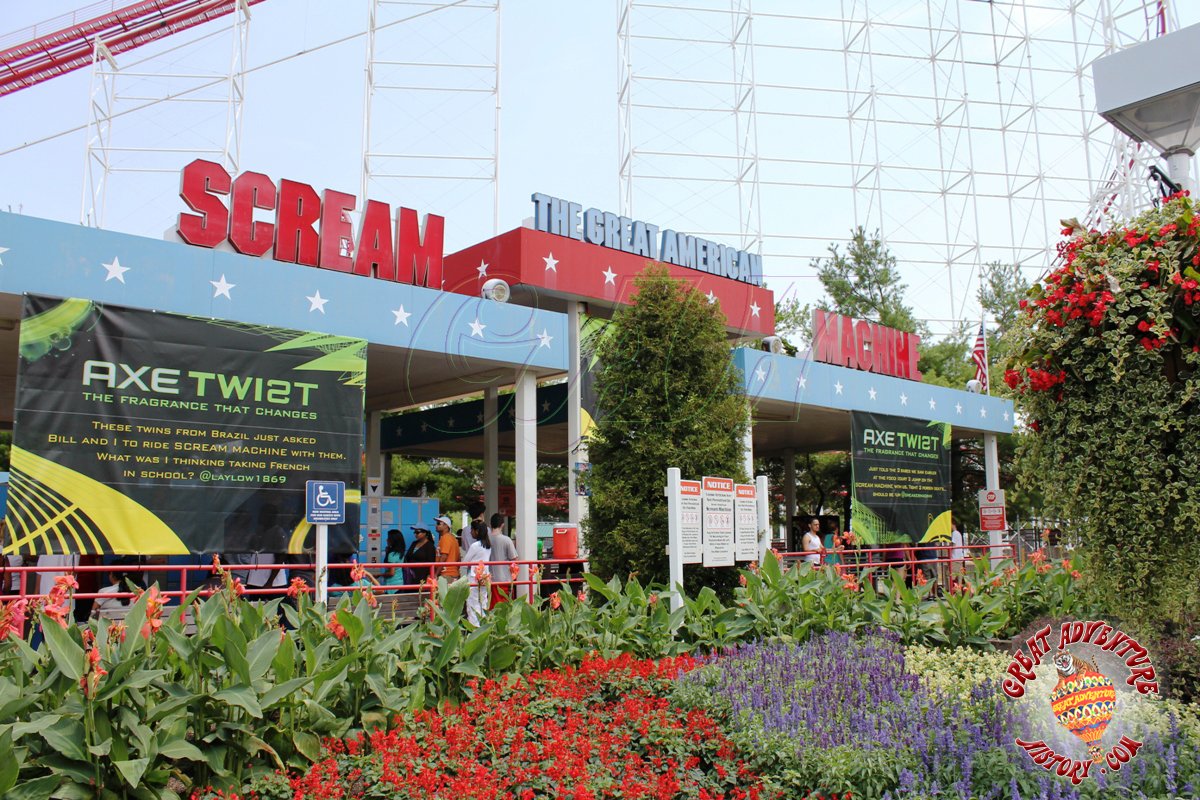
beyond. The queue building for the Scream Machine was the
first in the park to feature vending machines.
Some of the queue line's theme elements included examples of the various
American flags with plaques describing them and giving information on
the dates they were adopted.
Further along the queue, two lightboxes featured pictures of roller
coasters at other Six Flags parks including the original Great American
Scream Machine at Six Flags Over Georgia, and the Shockwave at Six Flags
Great America.
For the 1989 season, a photo booth was added to the ride, offering the
parks first onride coaster pictures using new technology that
photographed the entire train. Until that point, the only
onride photos offered in the park were on the Log Flume, and required a
photographer to manually take the picture of the families that had paid
for them, using orange flags to mark the boats which were to be
photographed.


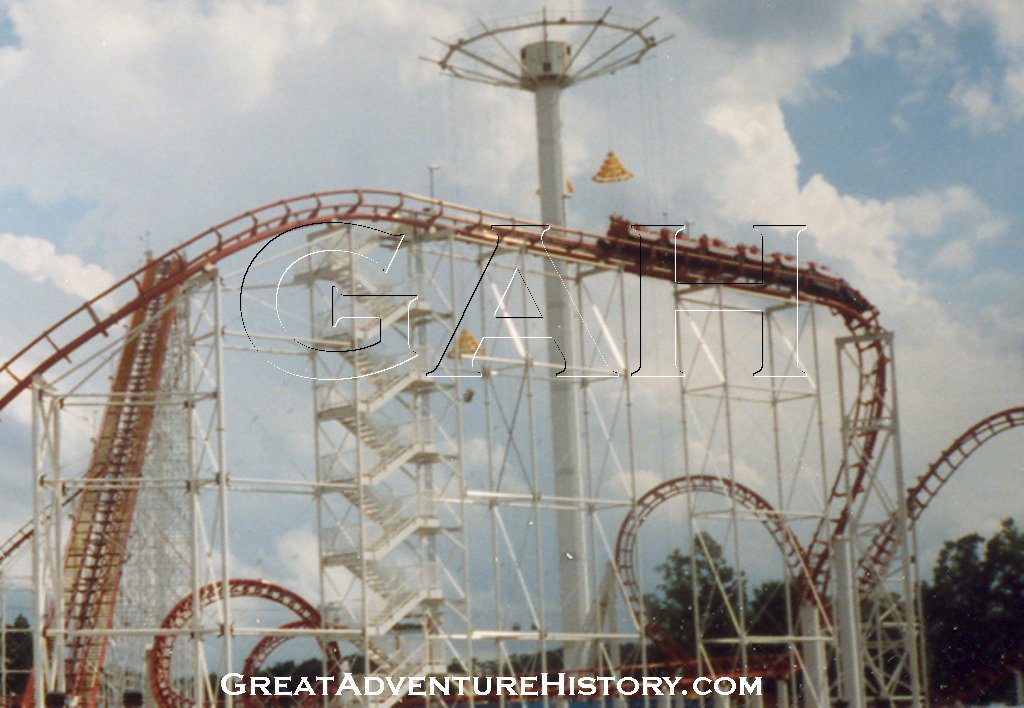
Some of the most
highly touted features of the Scream Machine were its safety features.
In addition to its "dual redundant" computerized braking systems, and
(along with its 2 sister Six Flags coasters Shockwave and Viper), the
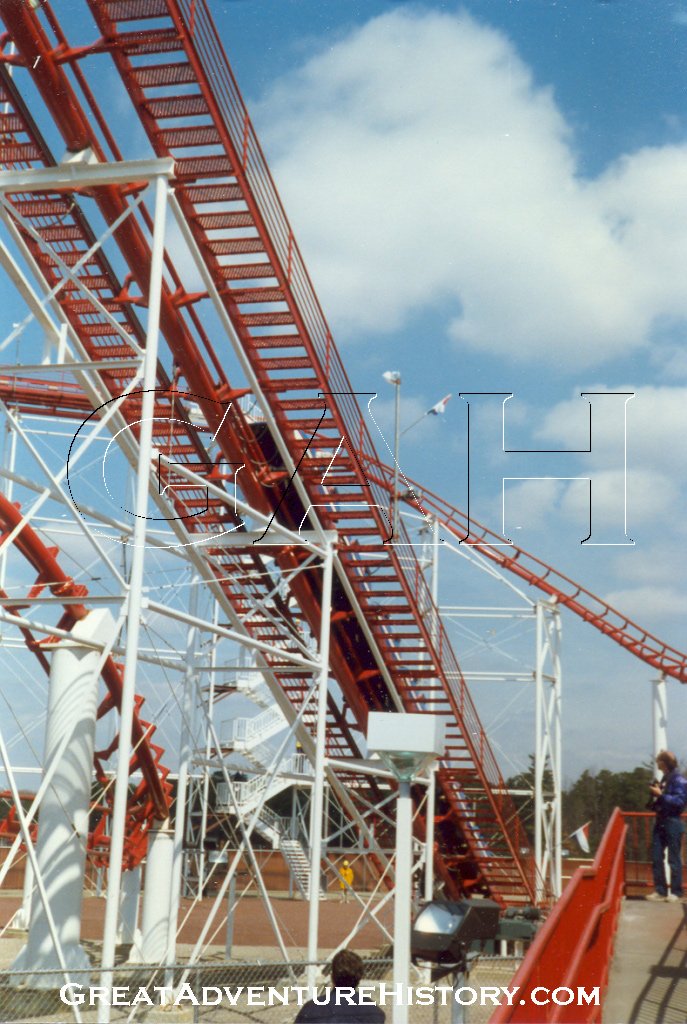
Scream Machine featured dual stairs on the lift hill. Most
coasters feature stairs only on one side of the lift, but Six Flags
opted to have the additional stairs as a safety measure.
The Scream Machine held the title of world's tallest, fastest looping
roller coaster until April of 1990, when Viper, the third and final
Arrow designed custom multi-looping coasters opened at Six Flags Magic
Mountain.

The Great American
Scream Machine delighted and amazed thousands of riders with its smooth
and fast ride. Though by today's standards the ride is
rough, at the time most coasters were designed with a trial and error
process, with designers not having the powerful computers to do the
complex calculations required for determining forces before the track
was fabricated and the ride actually running. Scream Machine
used state of the art design, and the track was fabricated to more
exacting tolerances than could have been achieved before.
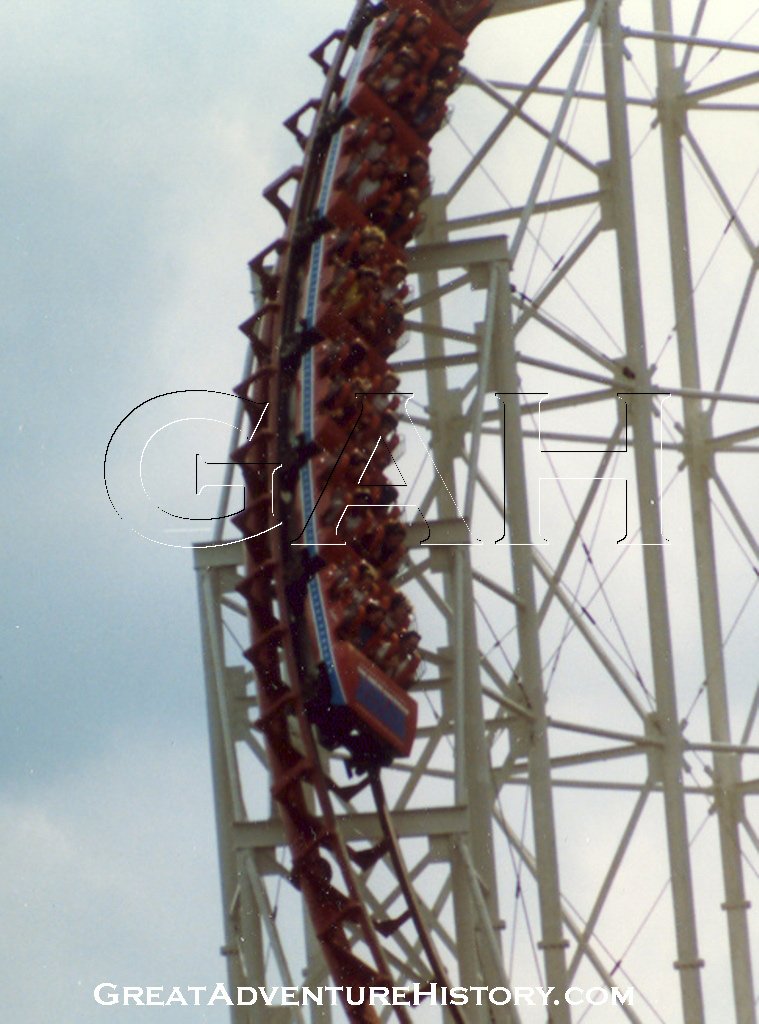
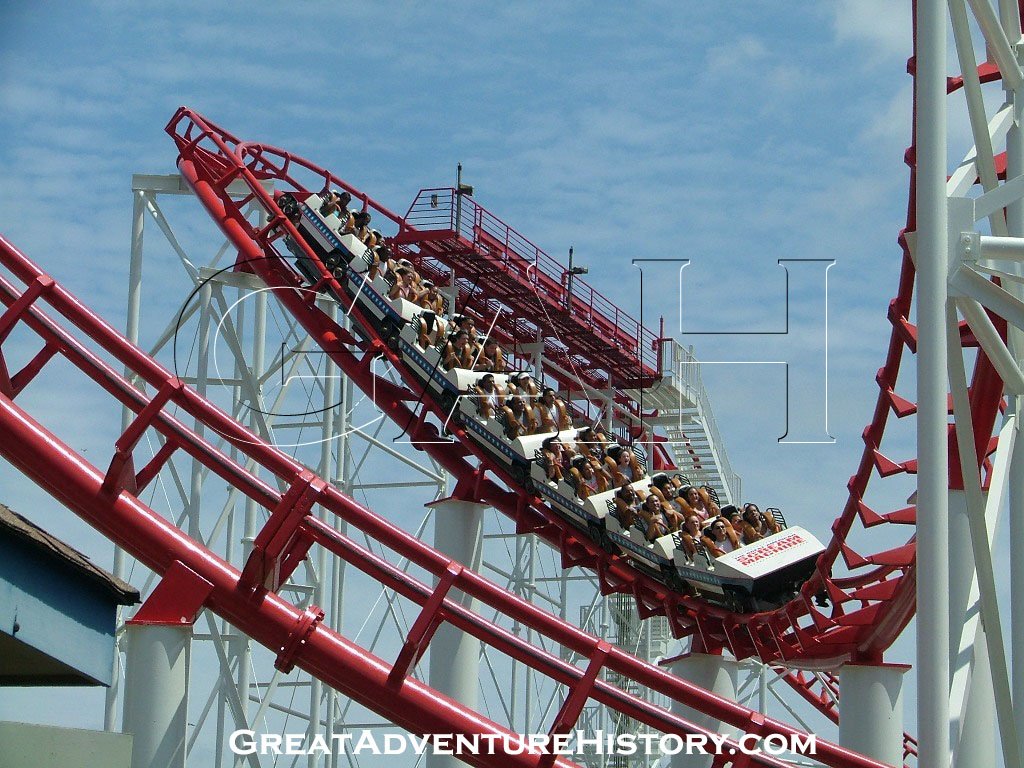
Despite the careful design, modifications were required including the
addition of a trim brake coming out of the first loop to help control
the speed and forces, and the slowing of the trains in the mid-course
brake run to a near stop to help make the direction changes less
forceful for riders in the boomerang and entering the corkscrews.

|

 |
| |
|
 |
 |
| |
|
 |
 |
| |
|
 |
 |
| |
|


|

 |
| |
|
 |
 |
| |
|
 |
 |
| |
|
 |
 |
| |
|
 |
 |
| |
|
 |
 |
|
|
|

 |

 |
| |
|
 |
 |
| |
|
 |
 |
| |
|
 |
 |
| |
|
 |
 |
| |
|
 |
 |
| |
|
 |
 |
| |
|
 |
 |
| |
|
 |
 |
| |
|
 |
 |
| |
|
|
 |
 |
 |
| |
|
|
 |

 |
 |
| |
|
|
 |
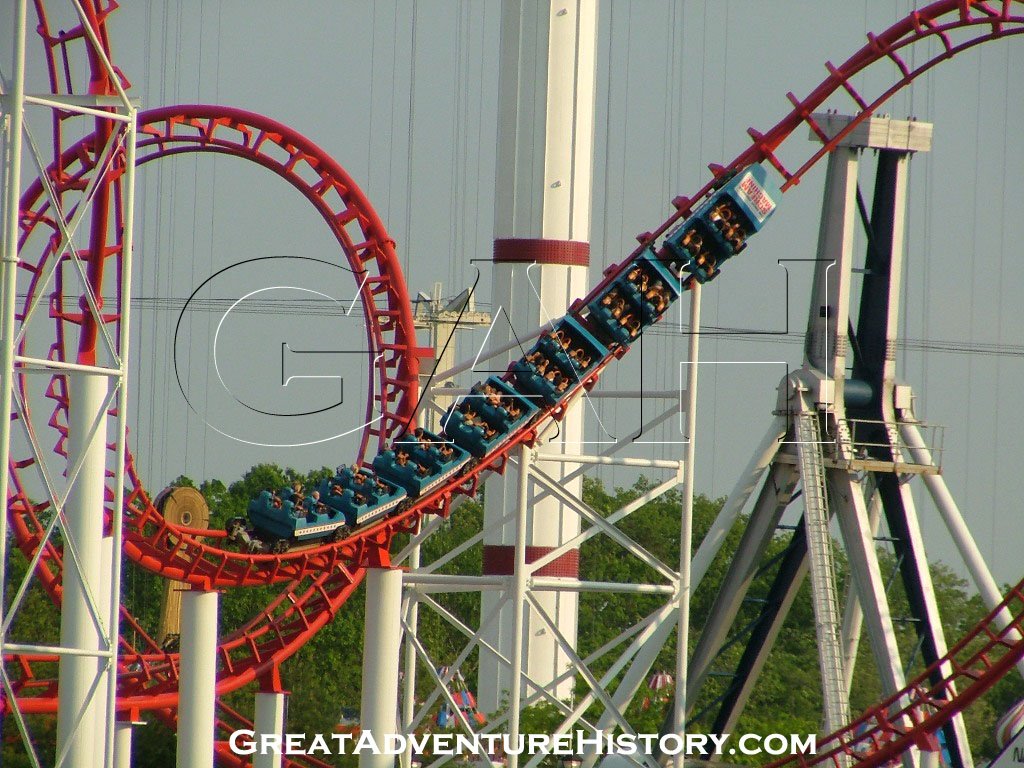
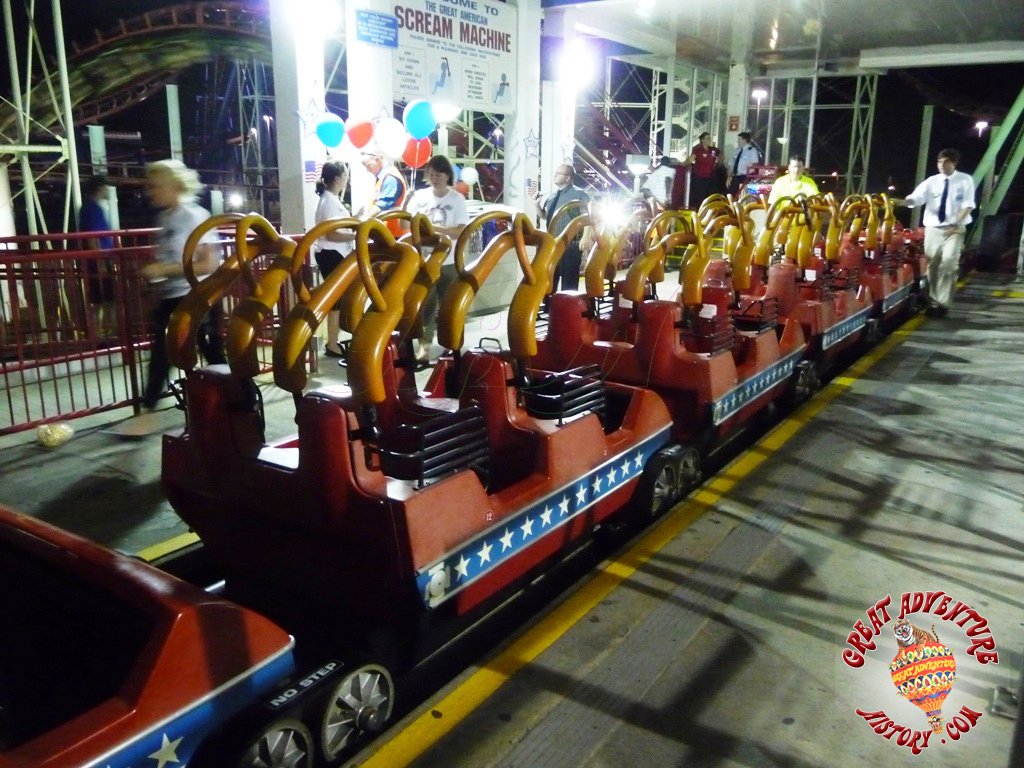
The three trains on the Scream Machine are red,
white and blue, and each have names along with having the distinctive
color and assigned numbers. The red train is "Freedom", the
white train is "Liberty" and the blue train is "Spirit". One
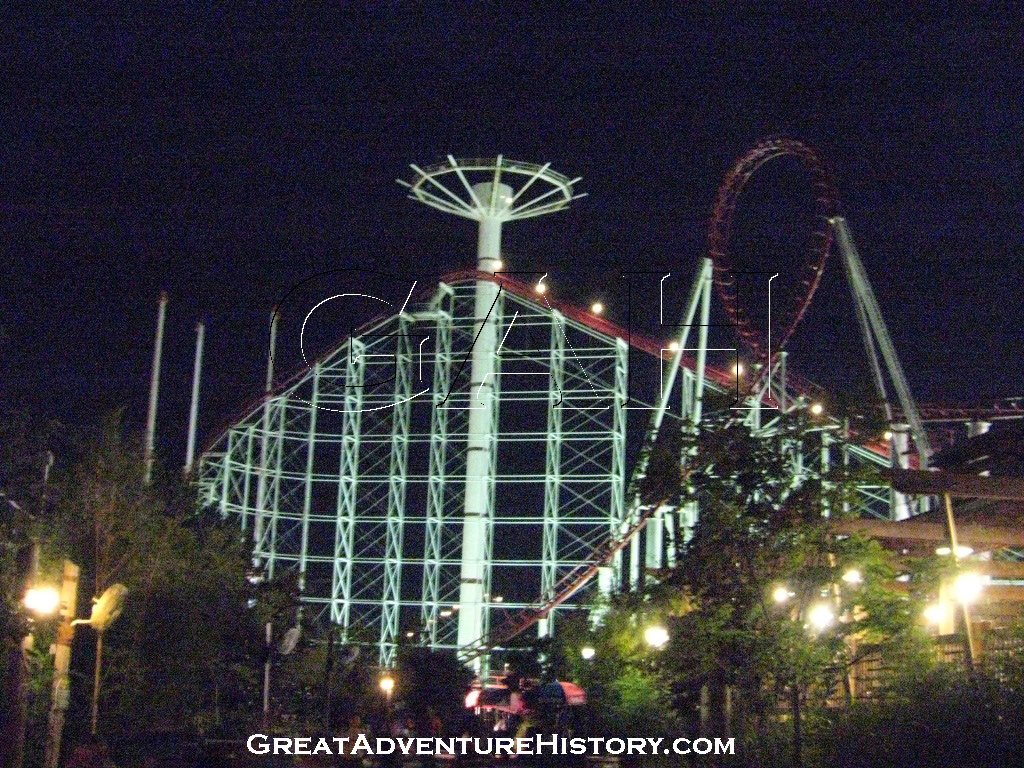
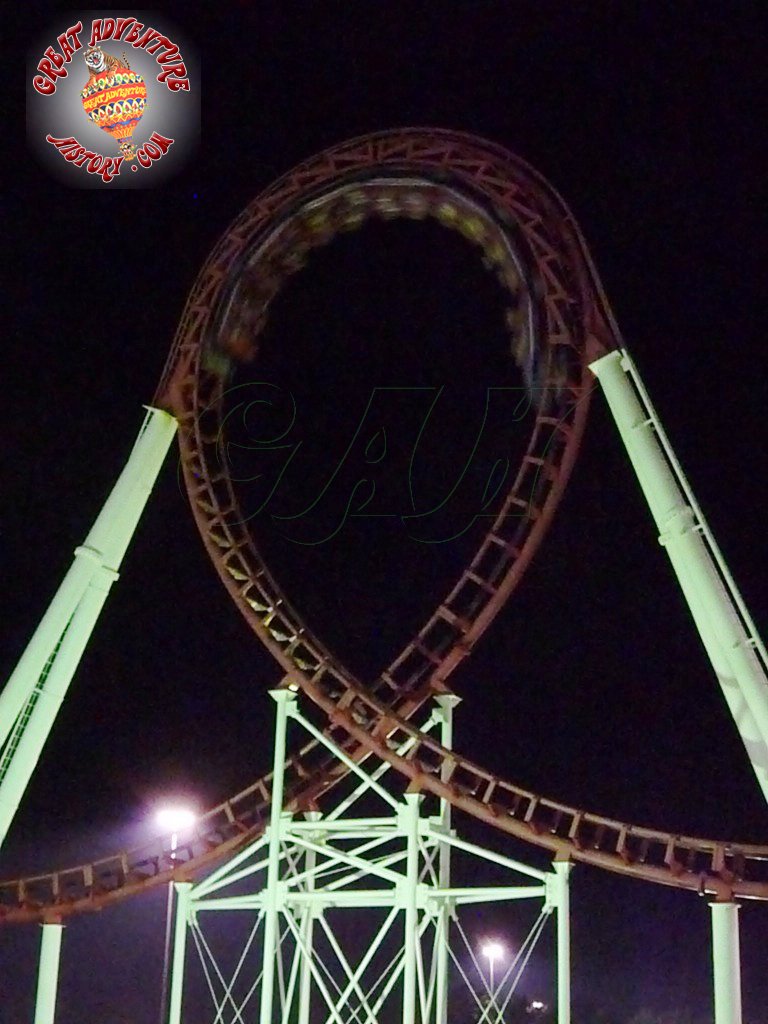
of the more unique ride features when it opened was the trains' onboard
lighting, with each car having lights in matching colors, which made a
unique look as it ran through the night skies as a trail of glowing
spots.
For several seasons, the amount of track
maintenance required on Scream Machine was considerable, with many of
the track welds requiring reinforcement and frequent inspections.
As a result the supports for the loops were fitted with ladders for
easier access.
In the 1992-1993 off season, the tops of the 3 vertical loops were
replaced, with the regular track being removed and replaced with top
sections that featured extra structural bracing. These new
track sections seem to have done the trick, with the Scream Machine
running very consistently since their installation.
|
 |
| |
|
 |
 |
| |
|
|
 |
 |
 |
| |
|
|
 |
 |
 |
| |
|
|
 |
Over time the Scream Machine has
had several sponsors several of which are pictured here.
The plaza and surrounding area in front of the queue house have changed
as the area was themed to Andrew's Air Force Base with the arrival of
The Right Stuff and later with the additions of the Space Shuttle and
Superman Ultimate Flight. The ride was intentionally
placed at the far end of the games area to draw guests past the counters
full of tempting prizes and unique games. |
 |
| |
|
|
Watch video of the
Great American Scream Machine
in action:
 |
 |
| |
 |
| |
 |
| |
|
|
 |
 |
 |
| |
|
|
 |
More recent additions
to the Great American Scream Machine have included the addition of Fast
Lane (now Flashpass), several updates to the onride photo systems, and
in 2006 a fresh paint job.
With the demise of the Shockwave at Six Flags Great America, one of the
coaster's trains was brought to Great Adventure for replacement
parts. This was actually one of four
trains which belonged to Shockwave. Originally the Shockwave
had 2 red trains and 2 yellow trains, with the idea that the four trains
would add capacity. It quickly became apparent that only 3
trains were necessary to the most efficient operations, since the trains
would stack on the brakes waiting for passengers to load and unload in
the station, so when Scream Machine was built, it was only given 3
trains.
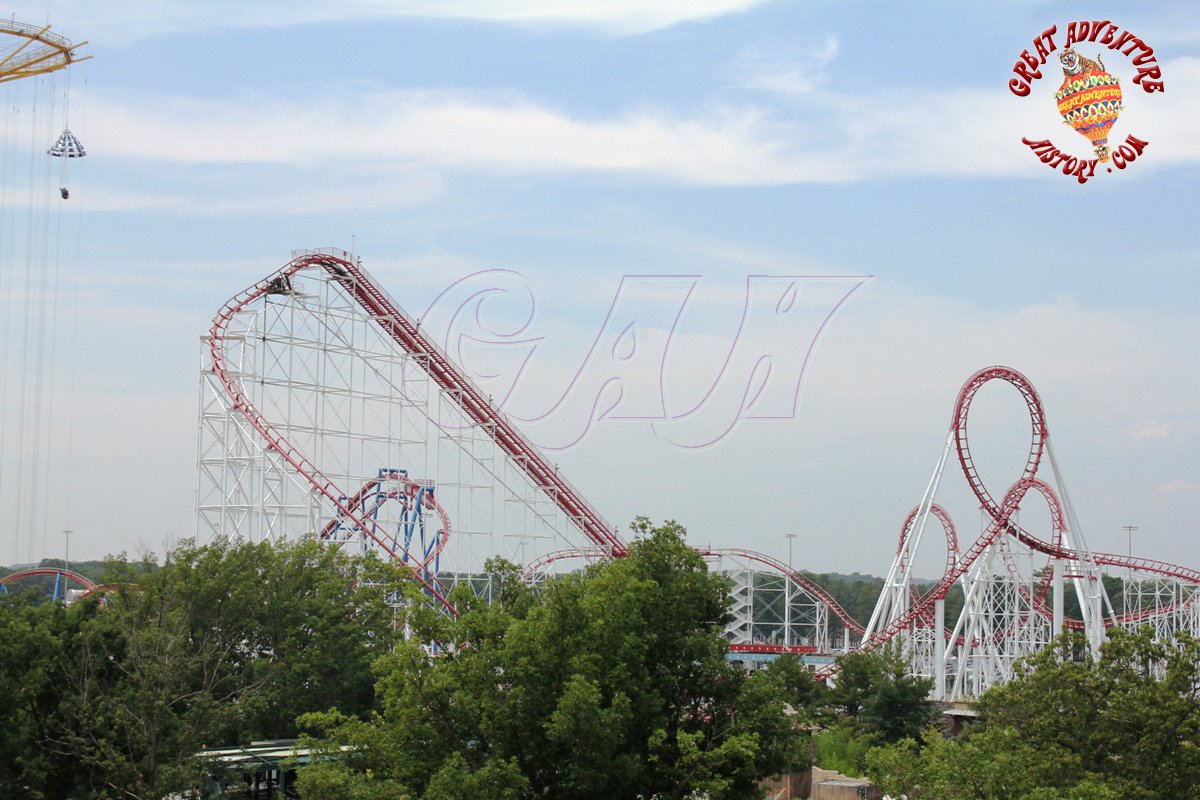
Over time,
the neighboring rides and sections have undergone many changes, probably
the most dramatic being the construction of Kingda Ka and the Golden
Kingdom. Suddenly the ride which once towered over the
Bugs Bunny Land section was dwarfed by its new neighbor which also took
the Scream Machine's previous records as the world's tallest and fastest
roller coaster.
With the new areas of the Golden Kingdom came newly opened views of
Scream Machine that were previously not available to park guests.
The track that formed the top of one of the ride's 3 vertical loops
found new life in the Wild Safari after being replaced with a reinforced
track section, and now offers a great climbing structure for the
resident baboons.
Since Scream Machine's construction, Arrow continued to build
their mega looping coasters for many parks, each using the same design
elements strung together in different sequences. Arrow's decline
as a coaster building company came from their lack of innovation.
They used their pre-designed elements over and over with bad transitions
connecting them. Meanwhile other coaster companies like
INTAMIN and Bolliger & Mabillard continued to innovate with fresh
elements and custom designs.
 |
 |
| |
|
 |
 |
| |
|
 |
 |
| |
|
 |
 |
| |
|
 |

 |
| |
|
 |
 |
| |
|
|
Click the links below to
watch
Great American Scream Machine
television commercials:

 |
 |
| |
 |
| |
 |
| |
 |
| |
|
|
 |
 |
 |
| |
|
|
 |
|
|
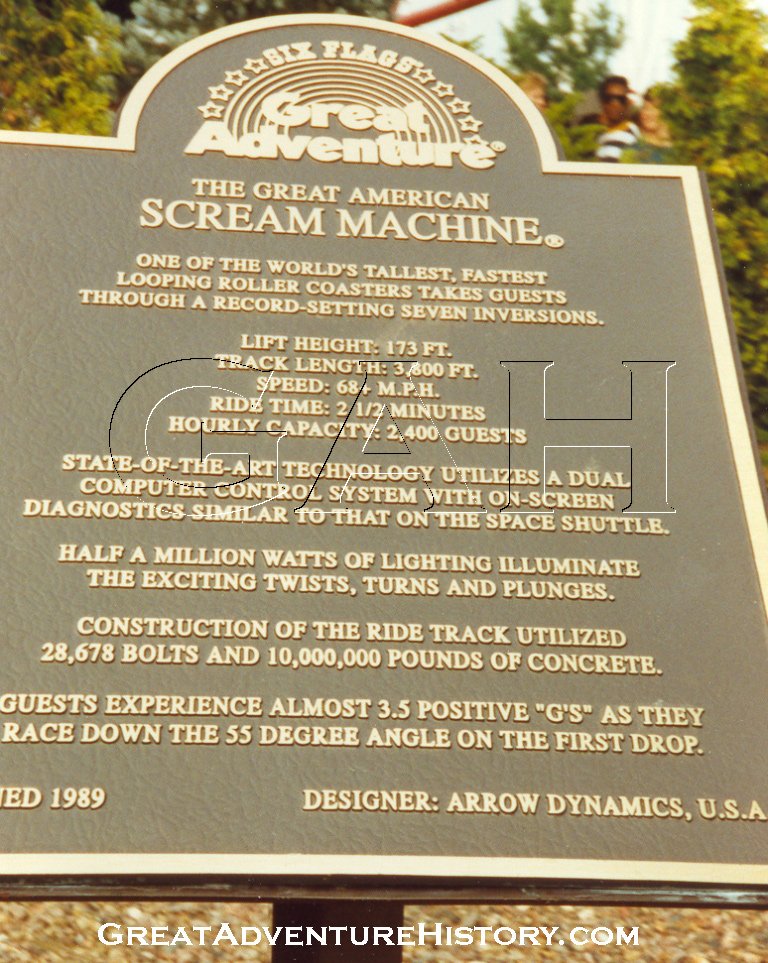
Technical Information |
|
| |
|
|
|
| |
Manufacturer: |
Arrow Dynamics, Inc. |
|
| |
|
Clearfield, Utah |
|
| |
|
|
|
| |
Type: |
Looping Steel Coaster |
|
| |
Ride Model: |
Six Flags Custom Design |
|
| |
|
|
|
| |
Opening Date: |
April 15, 1989 |
|
| |
|
|
|
| |
Height: |
173 Feet |
|
| |
Track Length: |
3800 Feet |
|
| |
Number of
Lifts: |
1 |
|
| |
Tallest Drop: |
155 Feet |
|
| |
|
|
|
| |
Number of
Inversions: |
7 |
|
| |
-
Vertical Loops |
3 - 136 Feet, 107 Feet, 97 Feet |
|
| |
-
Boomerang Loops |
2 |
|
| |
-
Corkscrew |
2 |
|
| |
|
|
|
| |
Maximum Speed: |
68+ mph |
|
| |
Approximate
Cycle Time: |
2 minutes 20 seconds |
|
| |
|
|
|
| |
Capacity: |
Approx.1900 guests per hour |
|
| |
|
|
|
| |
Number of
Trains: |
3 - Red (Freedom), White (Liberty),
& Blue (Spirit) |
|
| |
Riders Per
Train: |
28 people per train |
|
| |
Cars Per
Train: |
7 |
|
| |
Riders Per
Car: |
4 |
|
| |
Restraints: |
Shoulder harness |
|
| |
|
|
|
| |
Cost: |
$6.8 million |
|
| |
|
|
|
|
| |
 |
| |
|
|
 |
 |
 |
| |
|
|
Media
Coverage of the
Great American Scream Machine:


 |
 |
| |
 |
| |
 |
| |
 |
|
|
|
|
Closing Weekend- July 17-18, 2010 |
| |
|
|
 |
 |
 |
| |
|
|
 |
With the announcement
of the closing of the Great American Scream Machine on July 18th, the
coaster started drawing lines for the first time in years as guests
lined up for one last ride on the 21 year old ride.
The park
commemorated the ride's years of faithful service with a closing weekend
event and T-shirts celebrating the coaster's history. |
 |
| |
|
 |
 |
| |
|
|
 |
 |
 |
| |
|
|
 |
 |
 |
| |
|
|
 |
 |
 |
| |
|
|
 |
Even before the final
riders take their laps, the markings for new construction are beginning
to appear all around the coaster site.
Watch for pictures of the
removal of the Great American Scream Machine and construction of the new
attractions for the 2011 season coming in the following weeks! |
 |
| |
|
 |
 |
| |
|
|
 |
 |
 |
| |
|
 |
 |
| |
|
|
| Closing Night
and Final Ride |
| |
|
|
 |
 |
 |
| |
|
|
 |
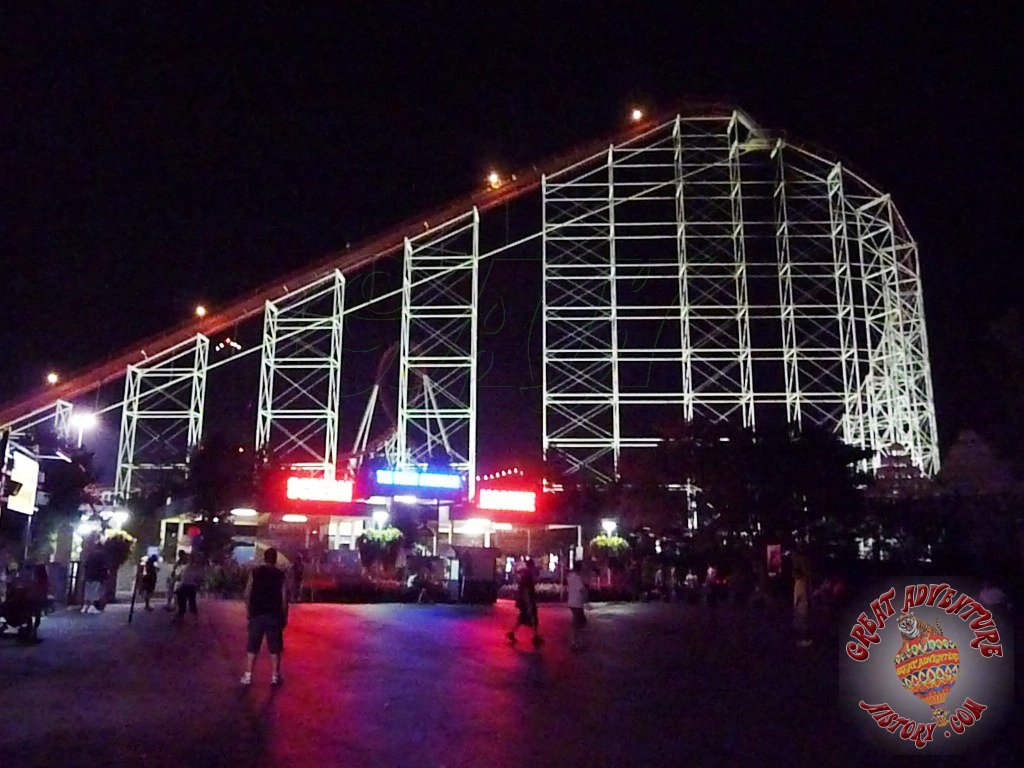
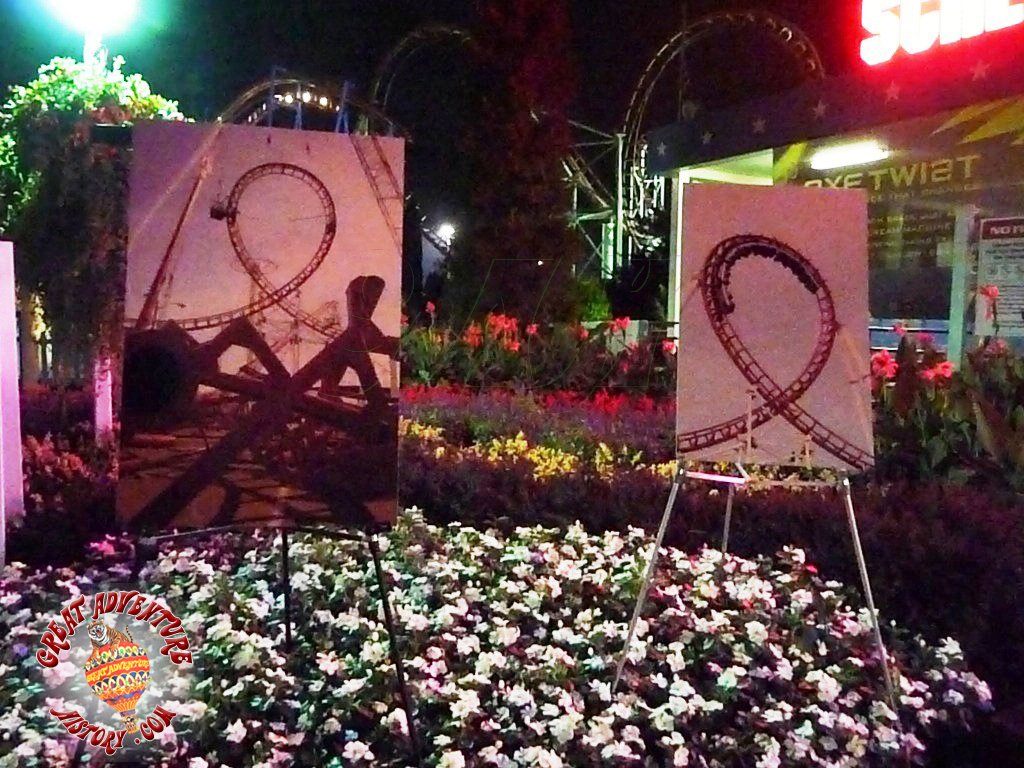
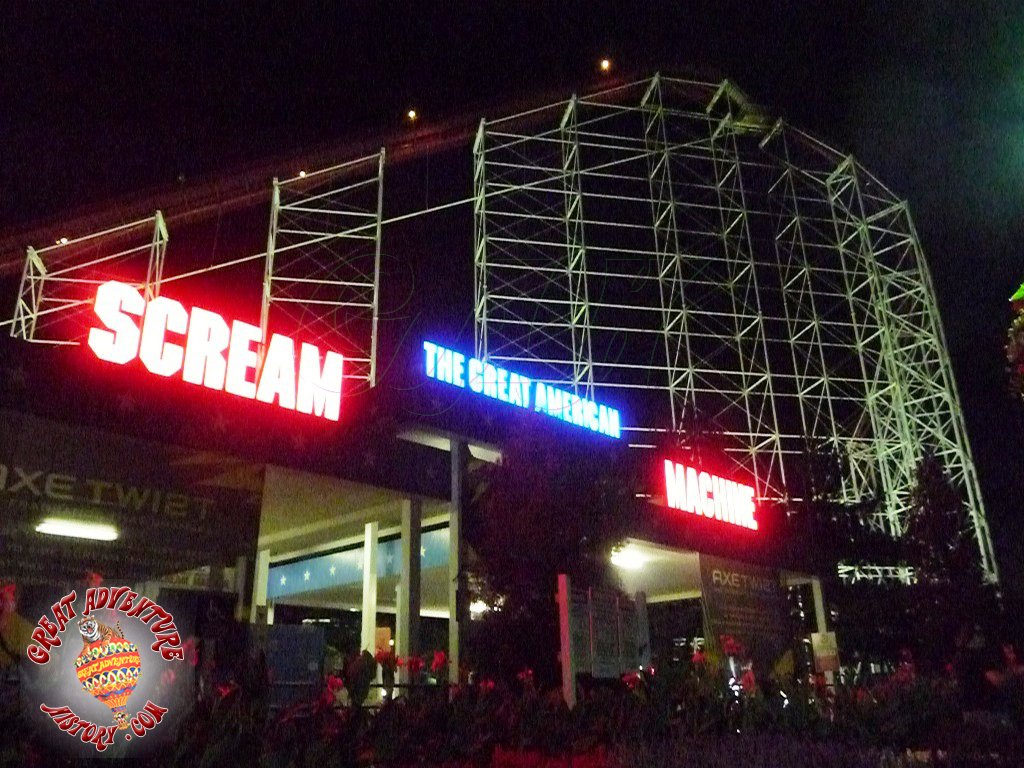
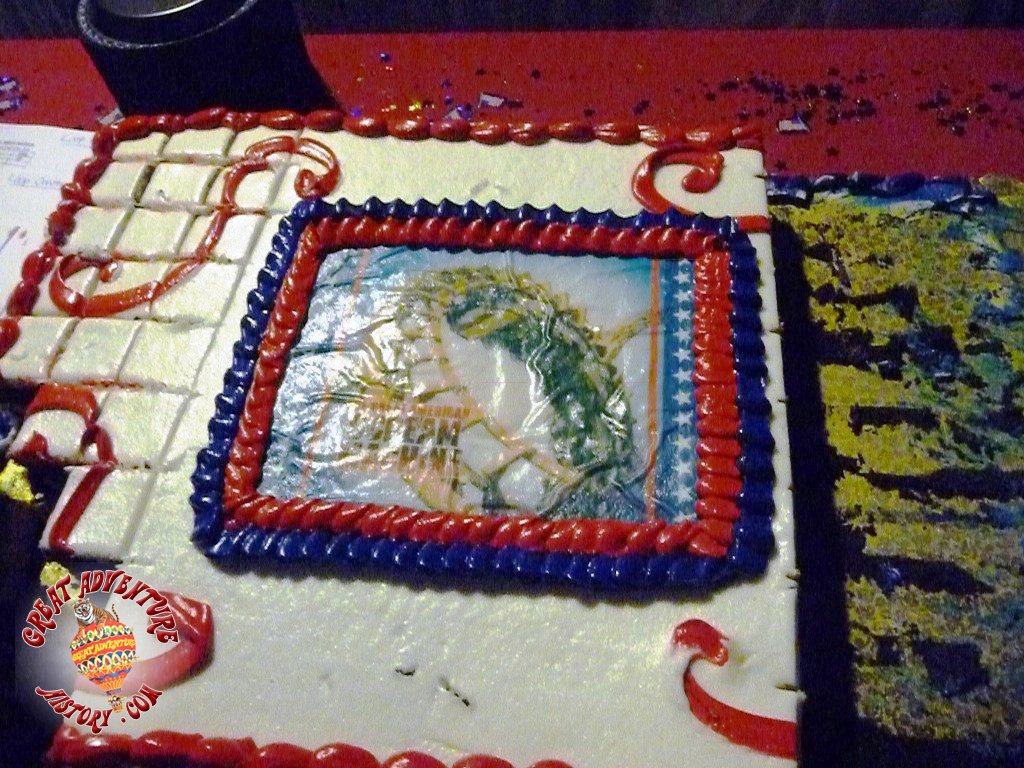
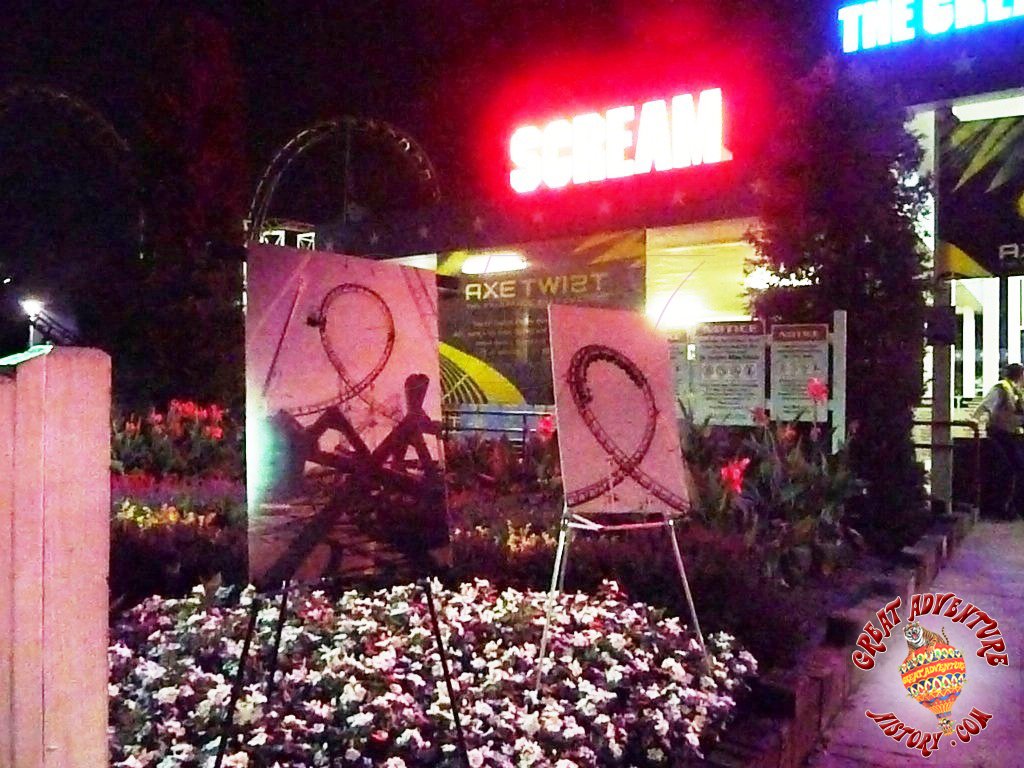
The Great American Scream
Machine was given a sendoff on Sunday, July 18th with a small
party for contest winners which featured a band, food and a
raffle of poster sized pictures of the ride under construction
and in its prime.
Proceeds from the auction of the seats
for the final ride and poster raffle benefitted the National
Roller Coaster Museum. |

 |
| |
|
|
 |
 |
 |
| |
|
|
 |
 |
 |
| |
|
|
 |
 |
 |
| |
|
|
 |
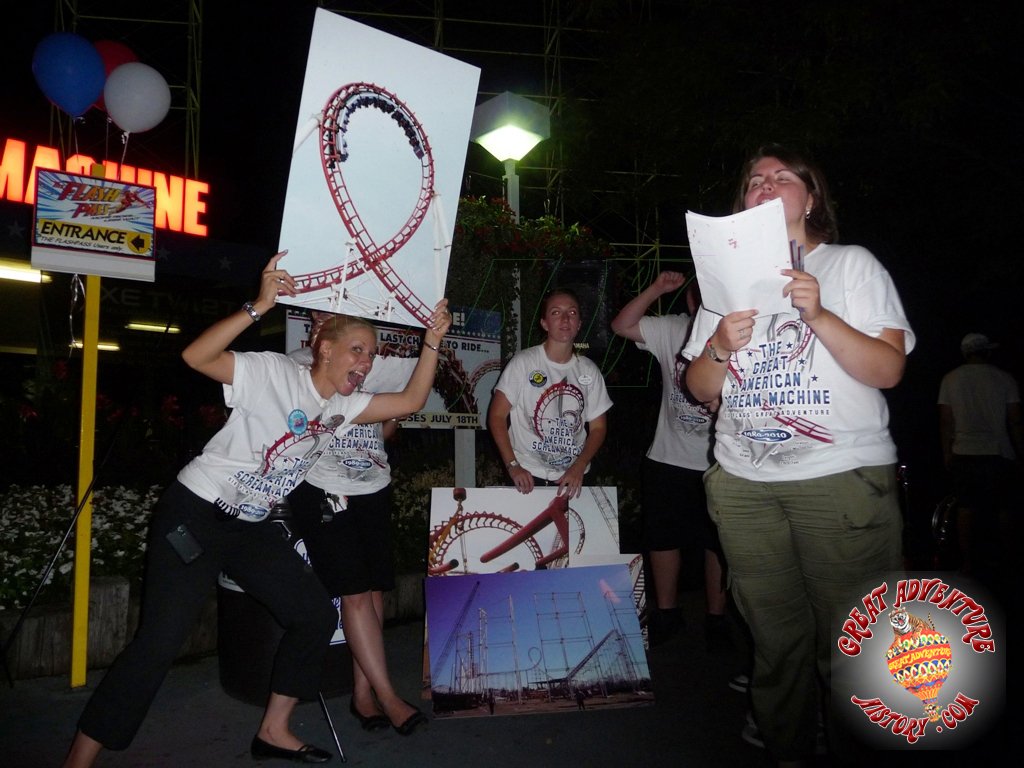
The Six Flags Great
Adventure Public Relations Team did a great job on the sendoff
event. Here they announce the winners of the posters before the
final riders line up. |
 |
| |

The final riders made their way towards the station through
the long queue line. |
|
 |
 |
| |
|
 |
 |
| |
|
|
 |
 |
 |
| |
|
|
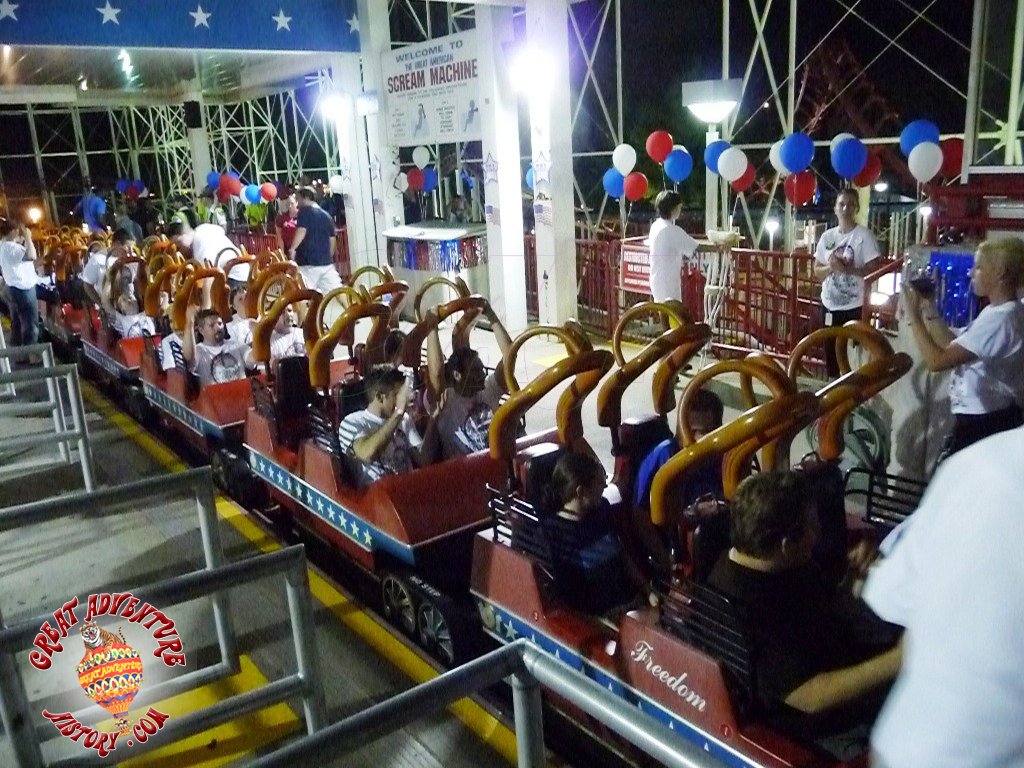
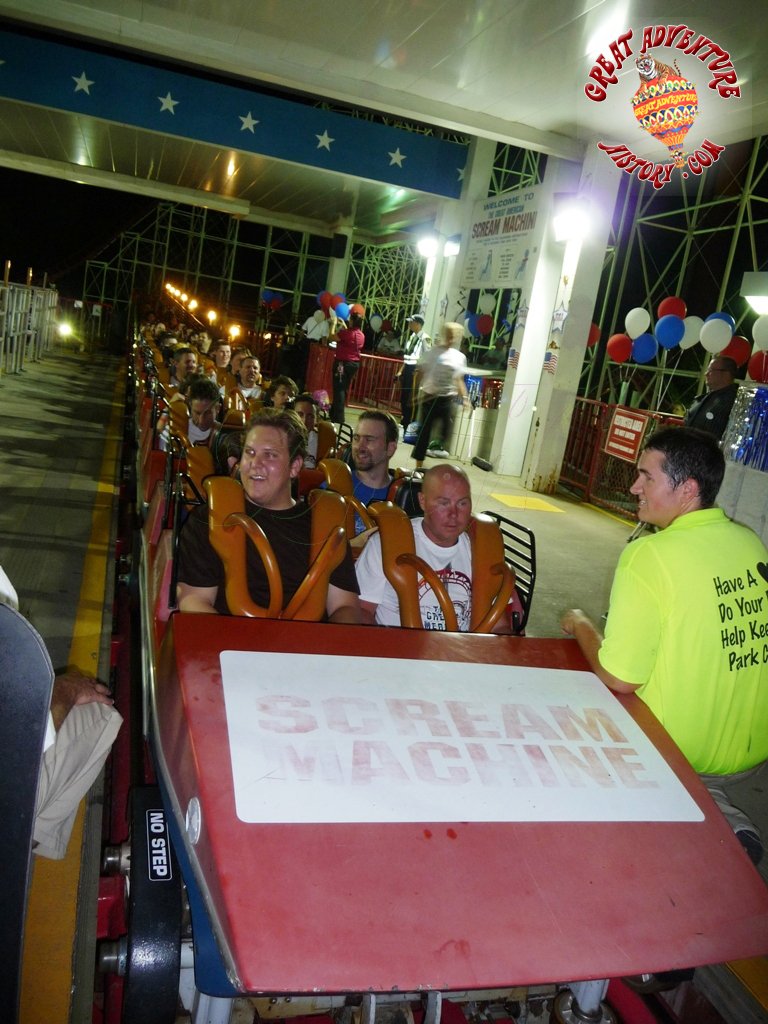
 |

The final train load of riders boards and gets ready for one
final scream.

After the final lap, riders disembarked and the Scream
Machine was officially retired. |
 |
| |
|
 |
 |
| |
|
 |
 |
| |
|
 |
 |
| |
|
|
 |
 |
 |
| |
|
|
| Removal of
the Coaster |
| |
|
|
 |
 |
 |
| |
|
|
 |
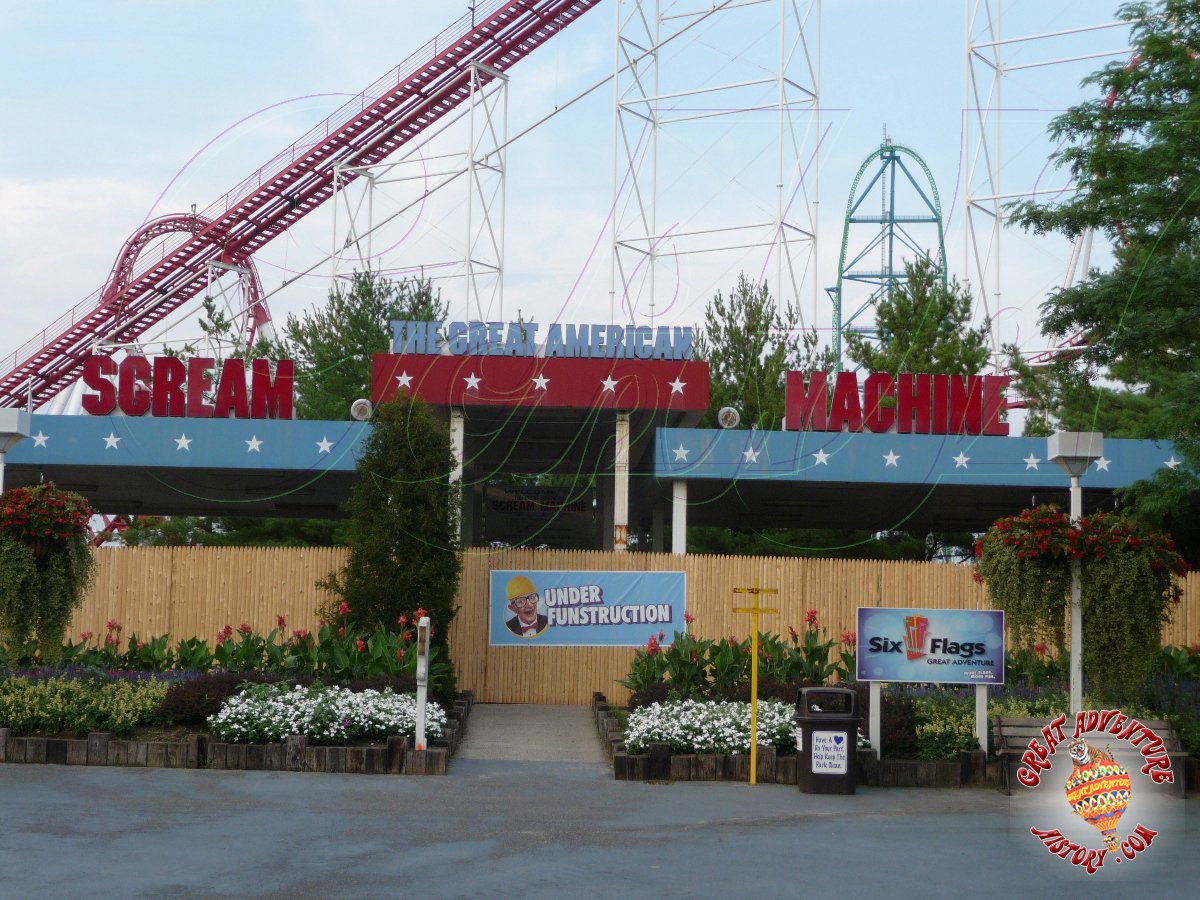
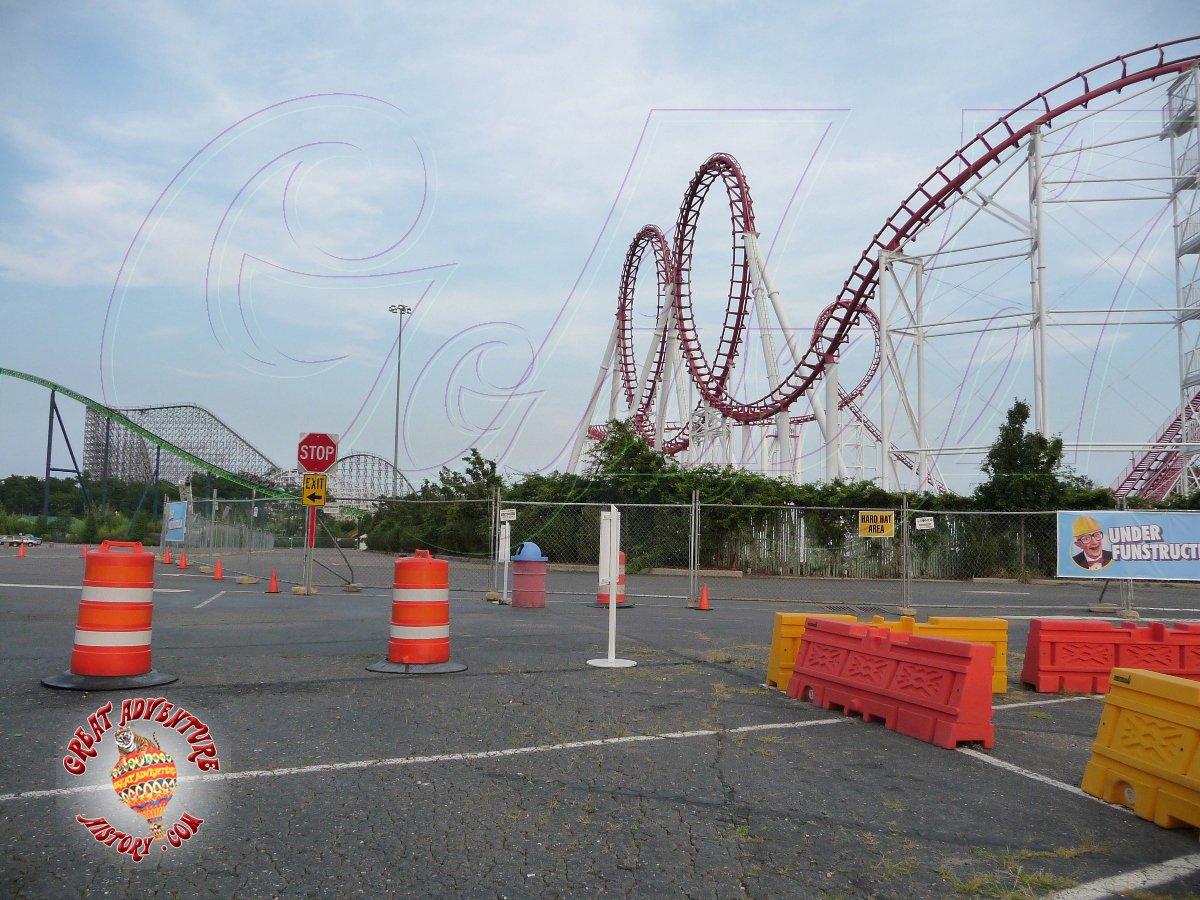
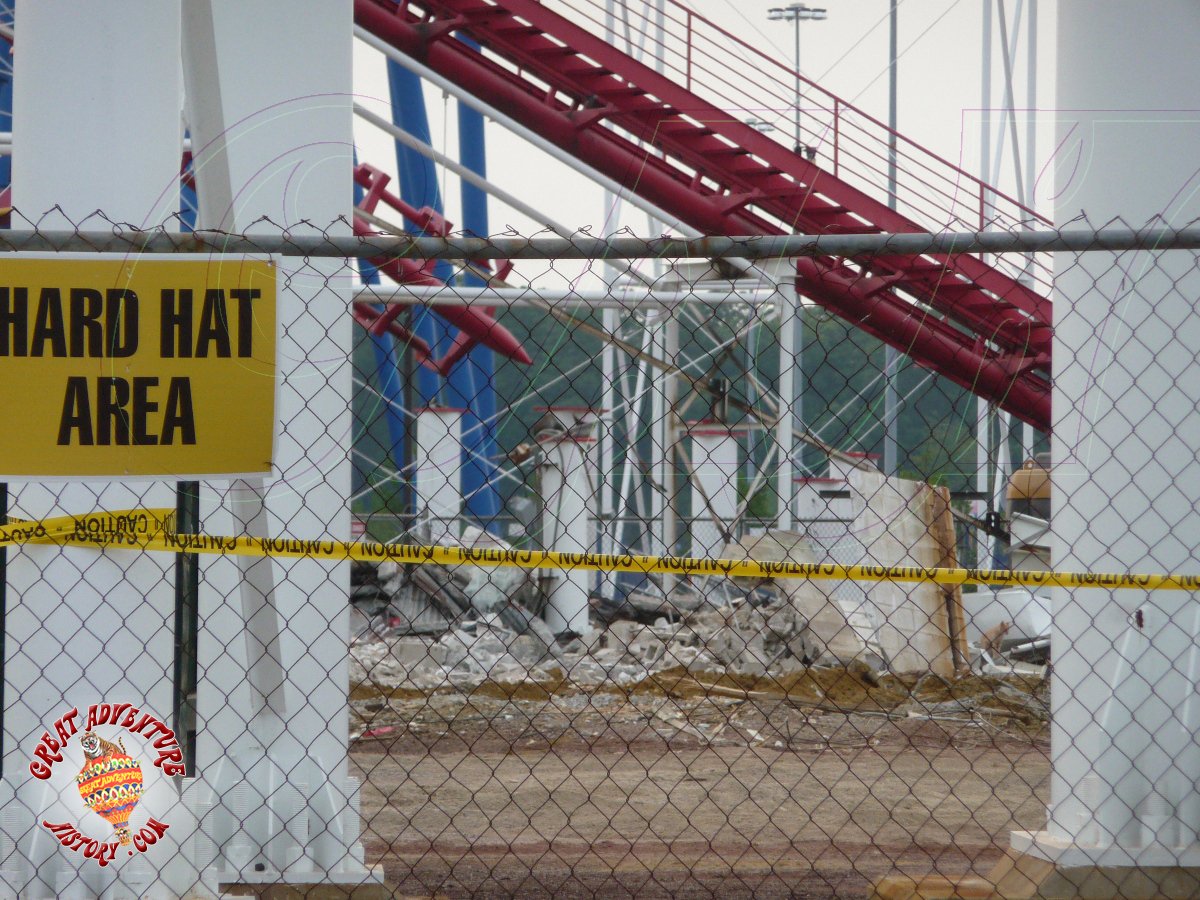
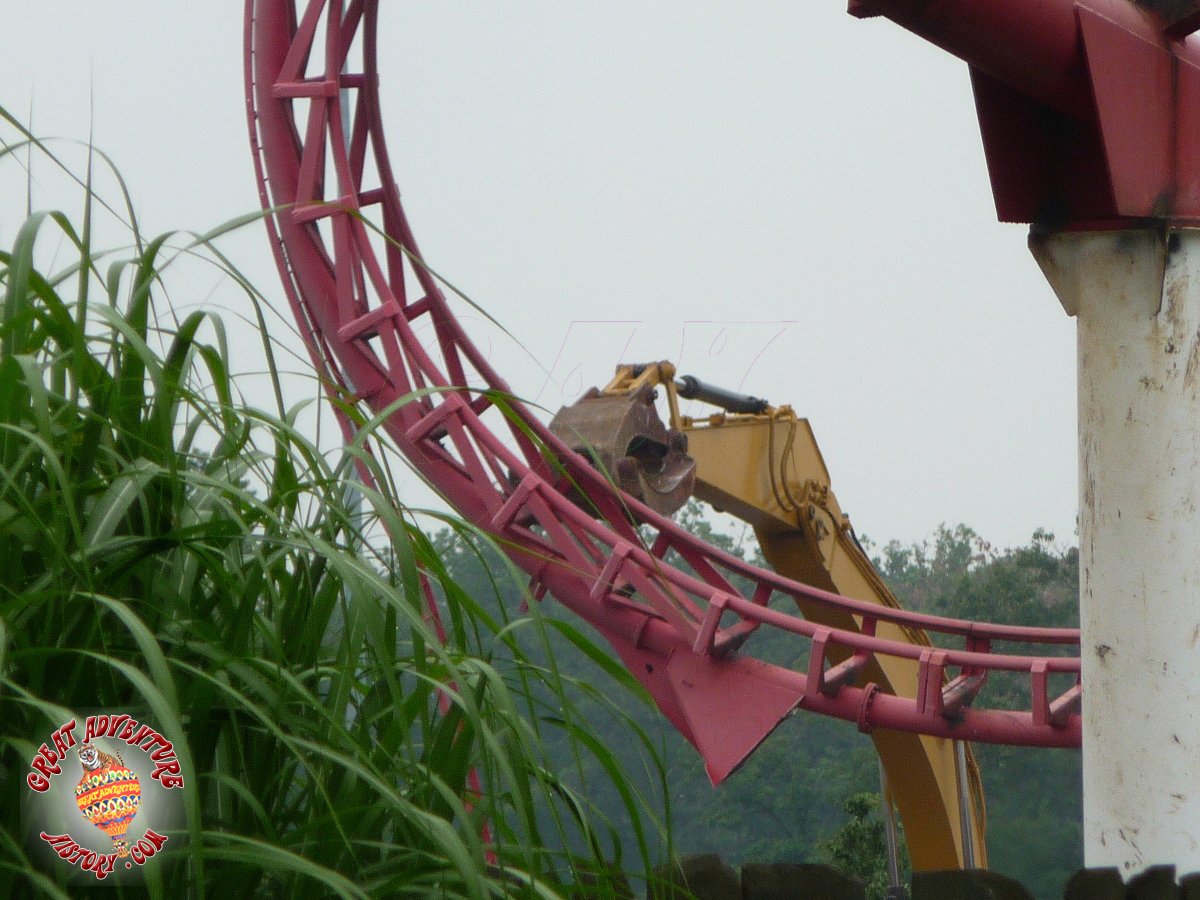
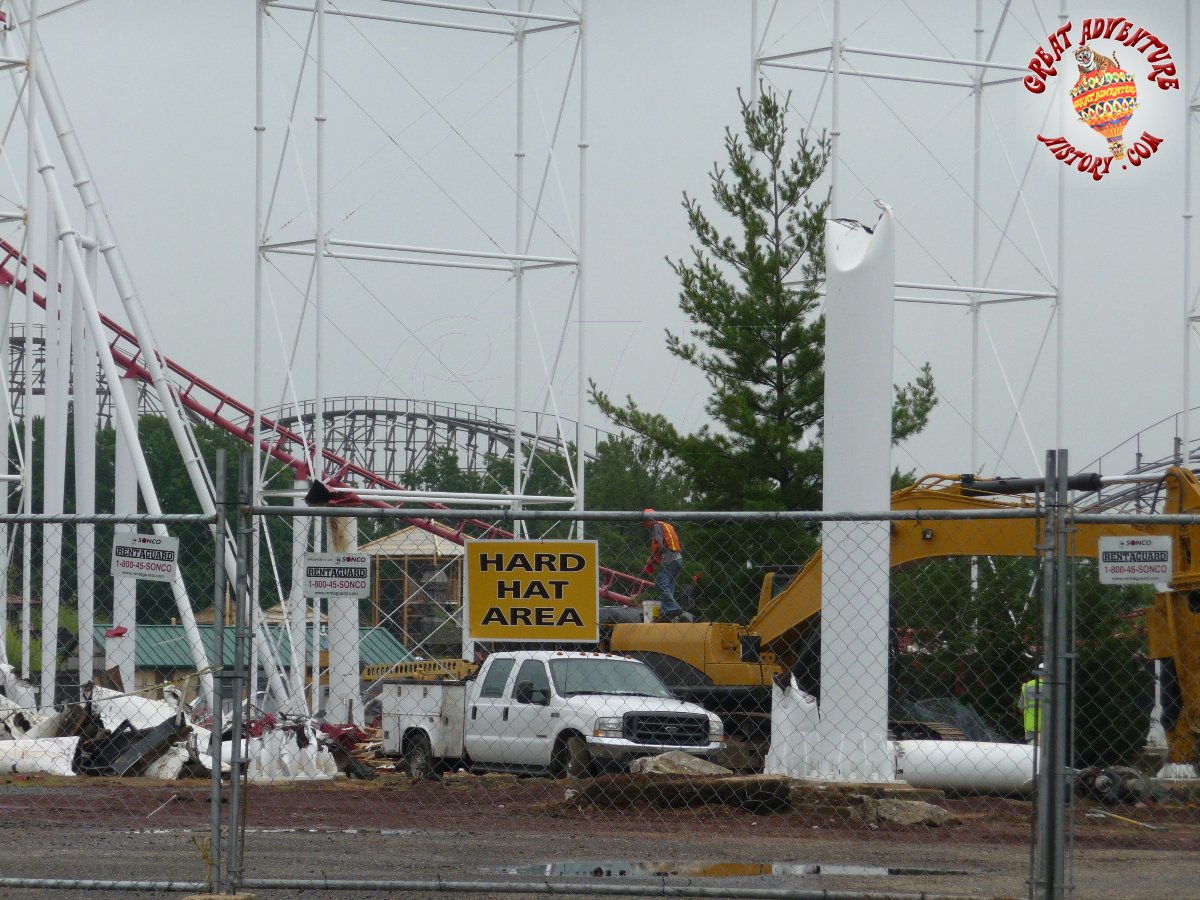
July 23rd:
The day after
the closure of the ride, construction fences went up in the
parking lot and across the former entrance and queue area.
Crews got to work immediately removing the trains and then
the transfer tracks and brake run.
The station building,
car shed and the covered queue were all demolished quickly to
clear the area for the larger cranes needed to remove the lift
and loops.
The track closest to ground level was the
first removed, with the turn from the boomerang into the
corkscrews being demolished making vehicle access to the site
much easier.
A small section of the final turn after the
corkscrews and before the brake run was also removed for the
cranes to be able to maneuver more easily around the lift
structure. |
 |
| |
|
 |
 |
| |
|
 |
 |
| |
|
|
 |
 |
 |
| |
|
|
_small.jpg) |
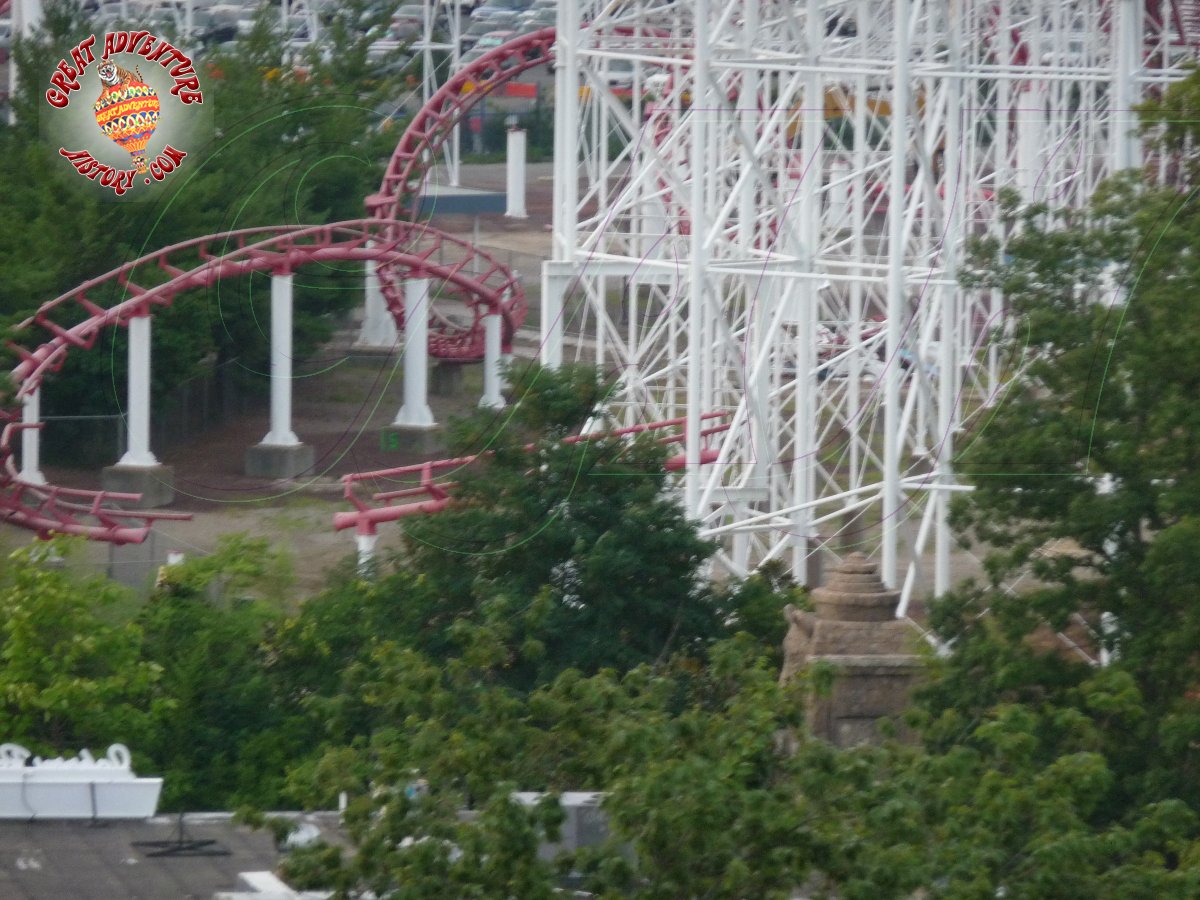
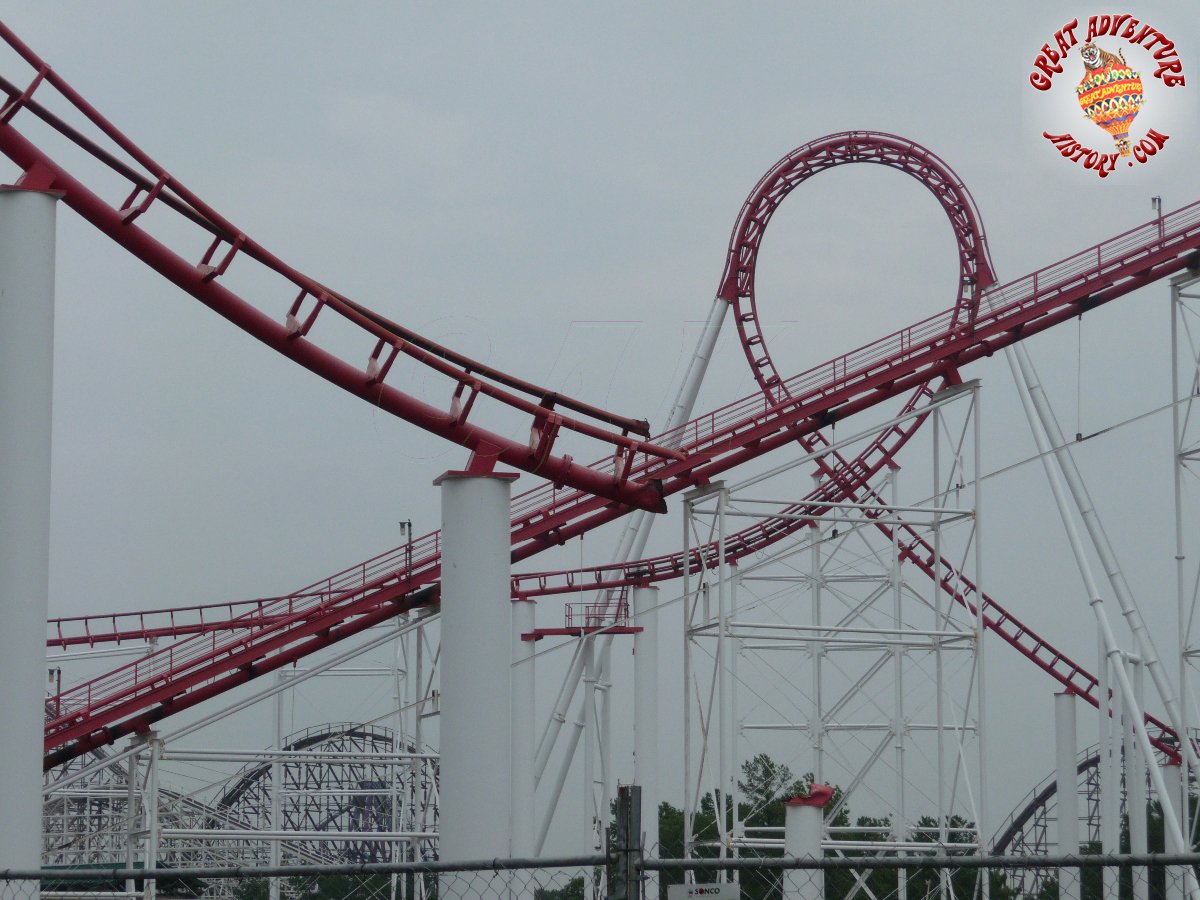
July 26th:
Work continued
removing the low track sections. The corkscrews, the remaining
approach to the brake run along with half of boomerang element.
In another day the remainder of the boomerang along with the
remaining supports for the low sections should be gone and then
it will be time for the big cranes to start removing the lift
and loop sections.

 |
_small.jpg) |
| |
|
_small.jpg) |
 |
| |
|
 |
_small.jpg) |
| |
|
 |
_small.jpg) |
| |
|
|
_small.jpg) |
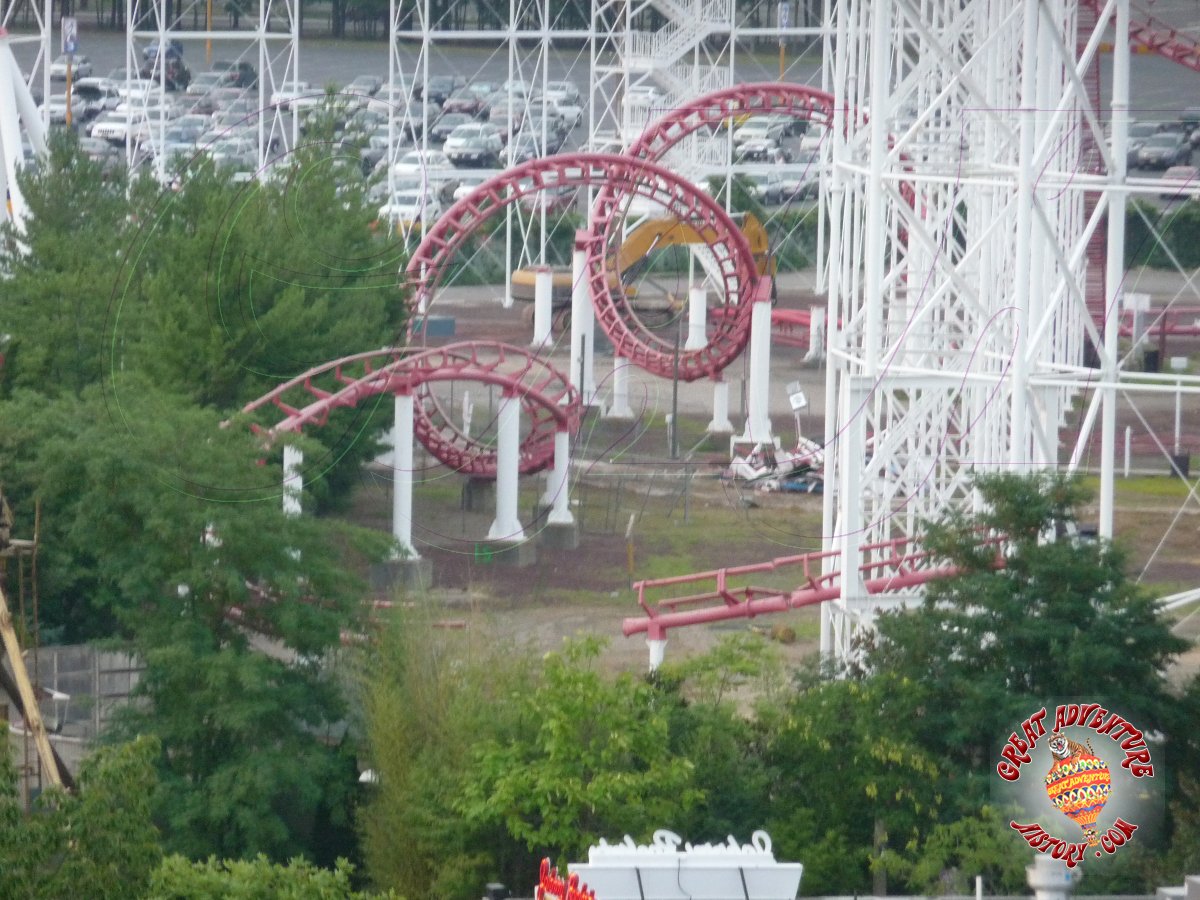
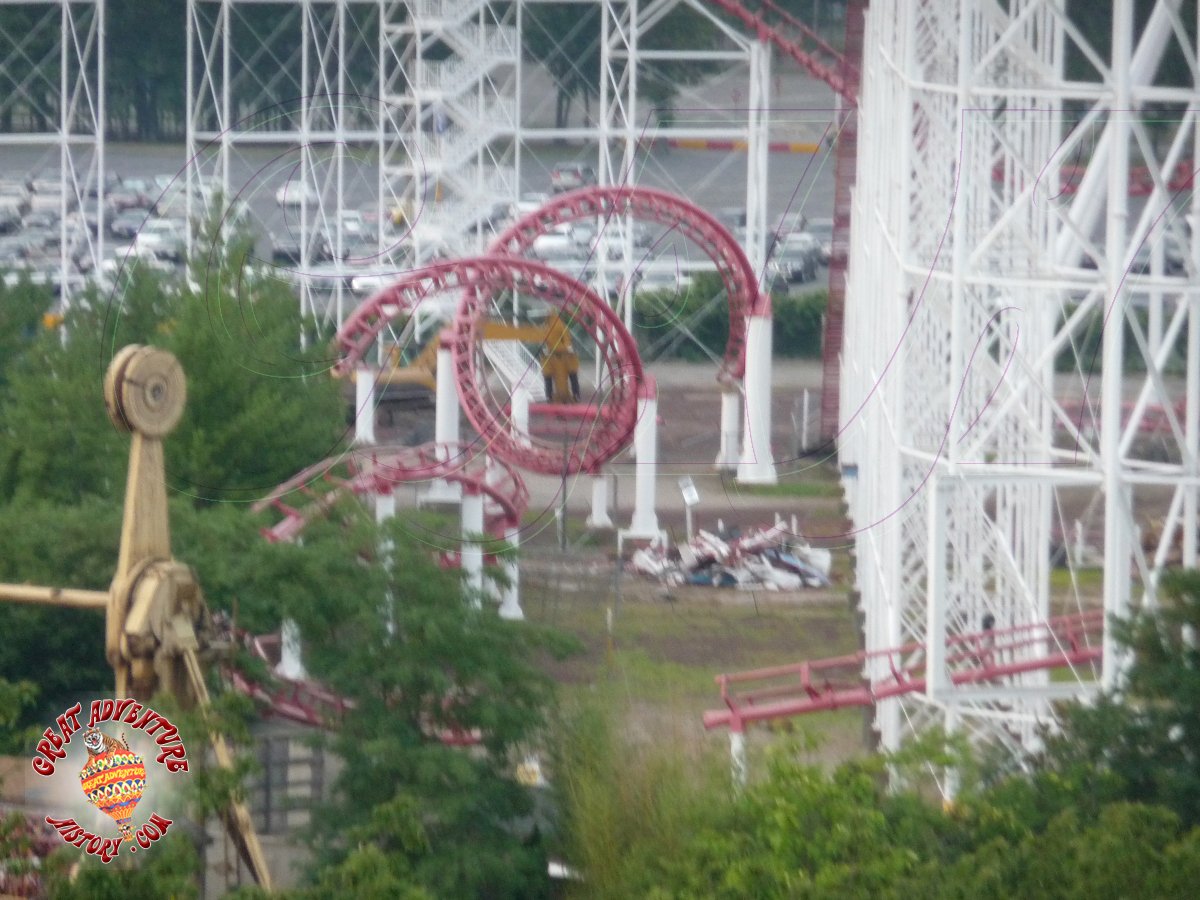
July 29th:
Progress in
removing the coaster continued at a fast pace with the third
loop being removed and the second following right behind. This
left just the first loop and lift hill in place.
The
small section of the brake run was the next section removed on
Friday, the 30th. |
_small.jpg) |
| |
|
_small.jpg) |
_small.jpg) |
| |
|
|
_small.jpg) |
_small.jpg) |
_small.jpg) |
| |
|
|
_small.jpg) |
 |
_small.jpg) |
| |
|
|
_small.jpg) |
_small.jpg) |
 |
| |
|
|
 |
Click the placard below for a short video
of demolition
of the
Scream
Machine's second loop:
 |
| |
 |
| |
|
|
 |
 |
 |
| |
|
|
 |
 |
 |
| |
|
|
 |
 |
 |
| |
|
|
 |
 |
 |
| |
|
|
 |
 |
 |
| |
|
|
 |
 |
 |
| |
|
|
 |
 |
 |
| |
|
|
_small.jpg)
 |
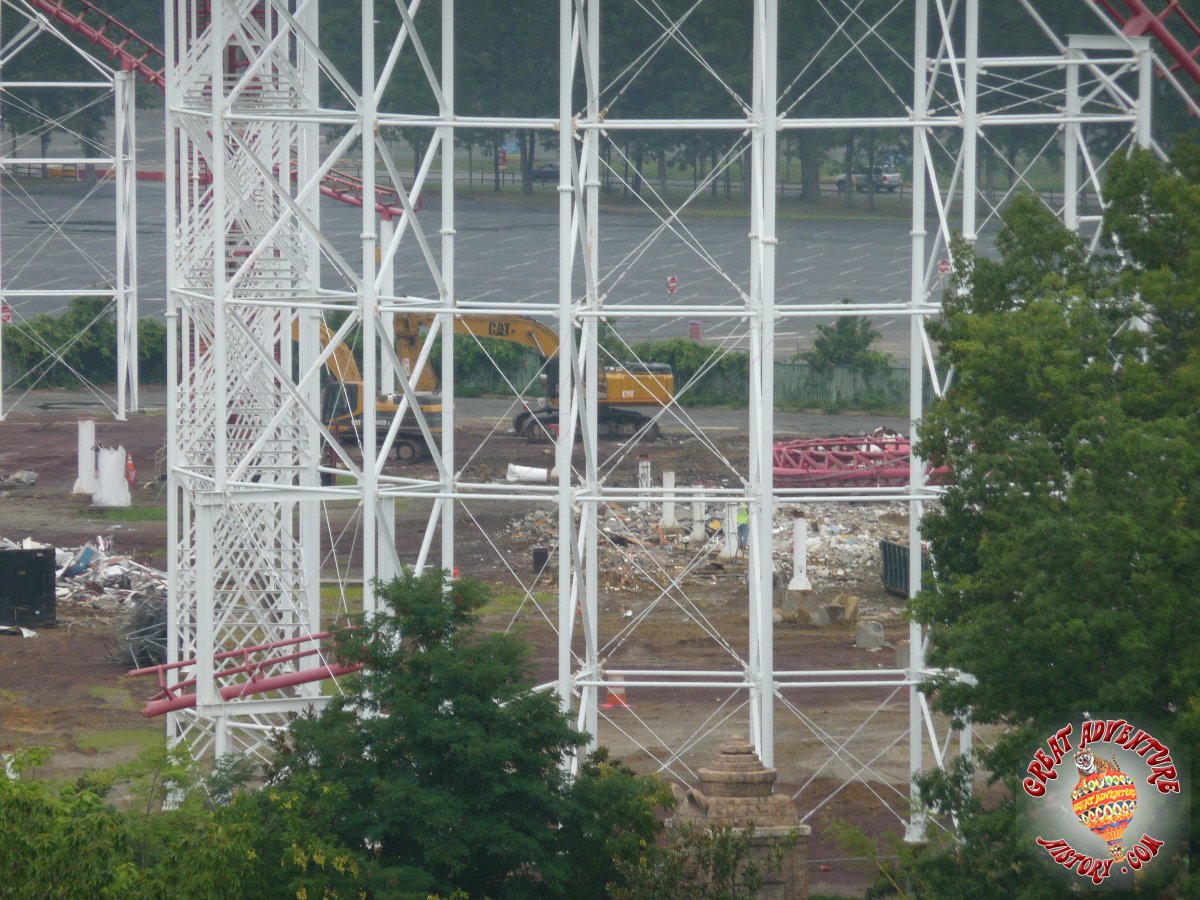
August 2nd:
As of August
2nd, the only sections of Scream Machine that remained standing
were the lift, drop and first loop. Over the course of the
day the run out track that lead from Loop #1 to Loop #2 was
systematically removed and truck loads of scrap metal were
trucked away clearing the site for the tallest loop to come down
next.
The pieces of track and supports were each cut
into small pieces and loaded into hopper trucks for hauling away
to a steel recycler.
Site preparation for the new coaster
also includes clearing the adjacent remnants of the Space
Shuttle pad and operator's booth. |
_small.jpg)
_small.jpg)
 |
| |
|
|
_small.jpg) |
_small.jpg)
_small.jpg)
 |
_small.jpg) |
| |
|
_small.jpg) |
_small.jpg) |
| |
|
_small.jpg) |
_small.jpg) |
| |
|
_small.jpg) |
_small.jpg) |
| |
|
|
_small.jpg) |
August 7th-10th:
With only
the highest sections of the coaster still remaining, work slowed
down as systematically the lift hill was removed with workers
using cutting torches to carefully separate the track from the
supporting structure.
With the cutting of each track
segment, it was carefully lifted off the hill with a tall crane.
Cutting the track during the day while the park was operating
resulted in temporary closures of the surrounding rides and
areas as sparks, soot and ash would rain down from the top of
the lift. |
_small.jpg) |
| |
|
_small.jpg) |
_small.jpg) |
| |
_small.jpg)
 |
|
_small.jpg) |
_small.jpg) |
| |
|
_small.jpg) |
_small.jpg) |
| |
|
_small.jpg) |
_small.jpg) |
| |
|
_small.jpg) |
While sections
of the lift hill were being removed up above, work continued
down below with the concrete footers being pulled up and jack
hammered into small enough pieces to haul away. Site preparation
for the new coaster will be commencing shortly as the final
remnants of Scream Machine are cleared. |
_small.jpg) |
| |
|
_small.jpg) |
_small.jpg) |
| |
_small.jpg)
 |
|
_small.jpg) |
_small.jpg) |
_small.jpg) |
August 13th:
A large
portion of the lift hill support structure has been removed and
along with it a section of the drop is now gone.
The
remainder of the lift structure and drop should be gone within
the coming weeks. |
_small.jpg) |
| |
|
_small.jpg) |
_small.jpg) |
| |
|
|
_small.jpg) |
_small.jpg) |
_small.jpg) |
| |
|
|
_small.jpg)
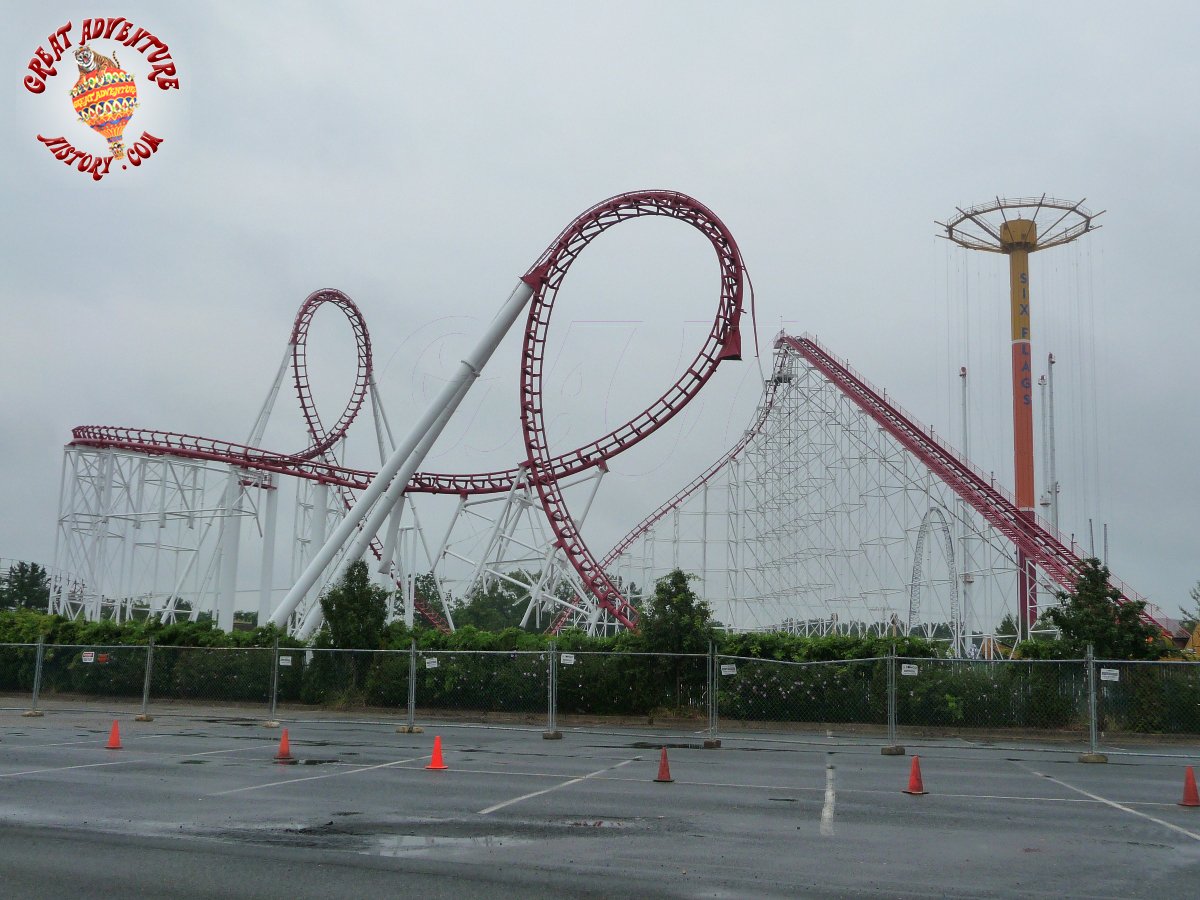
 |
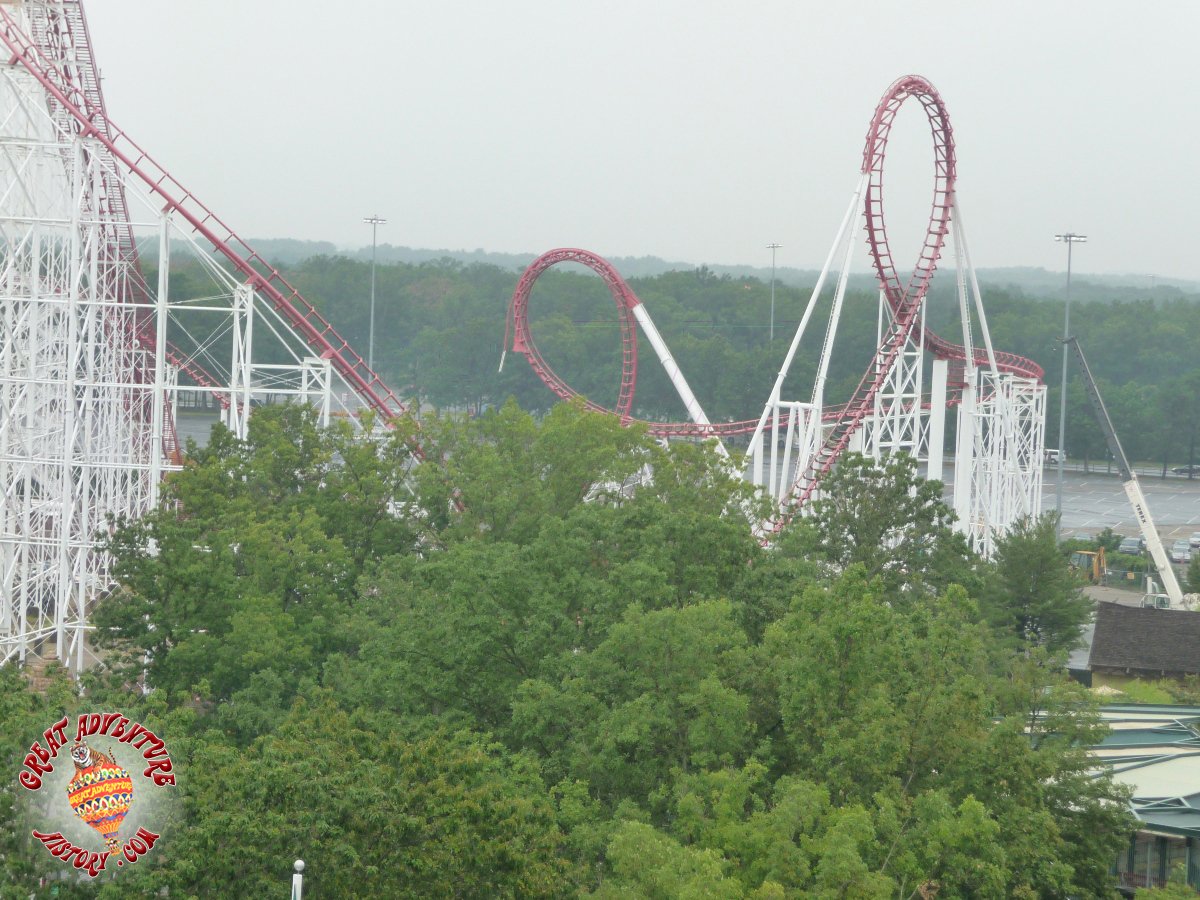
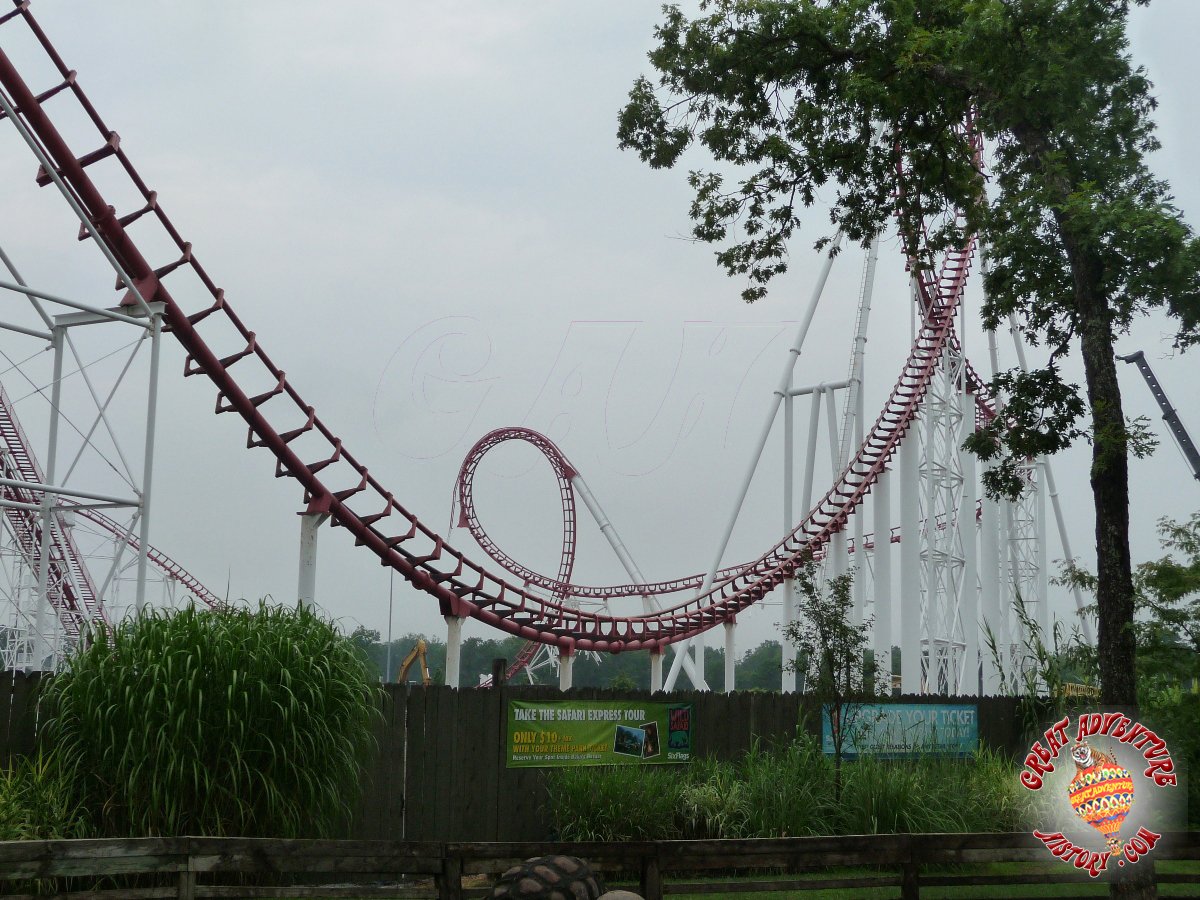
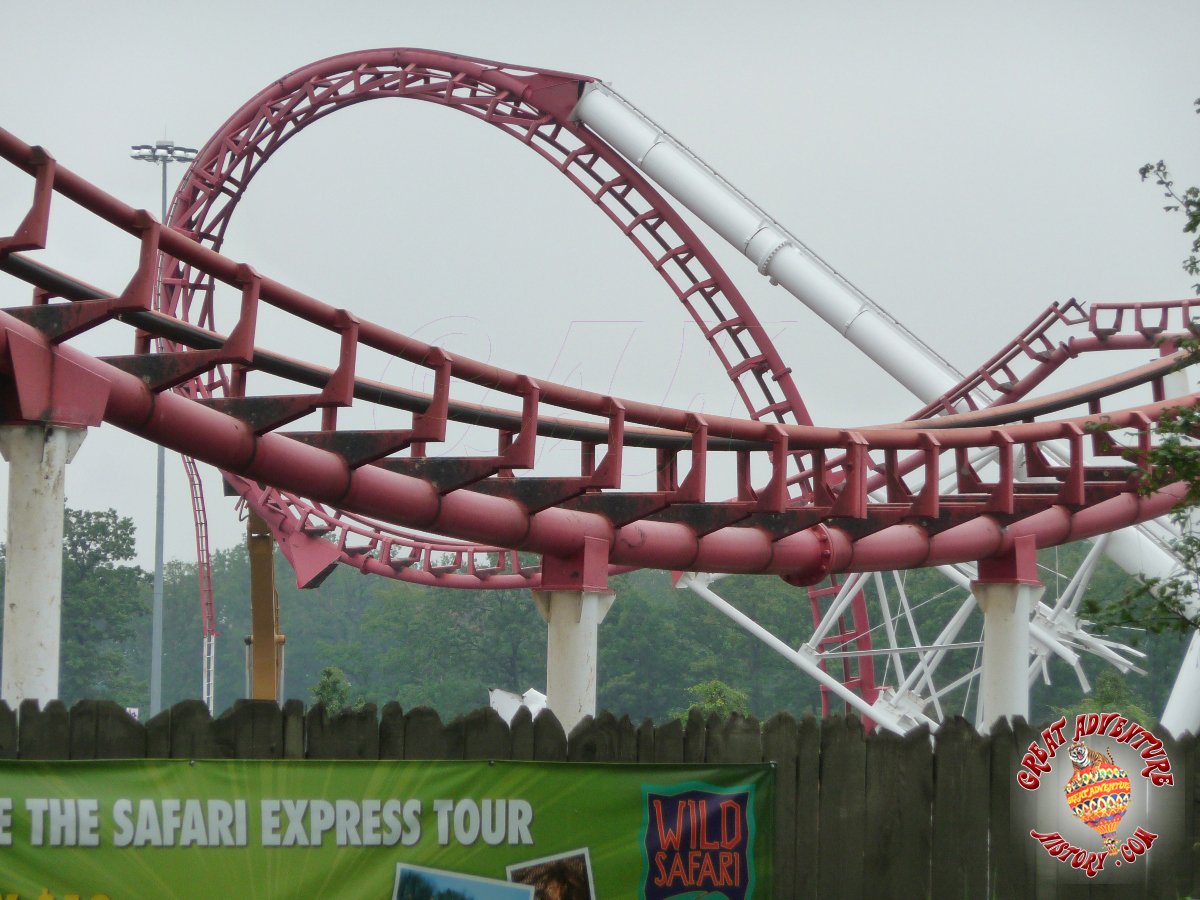
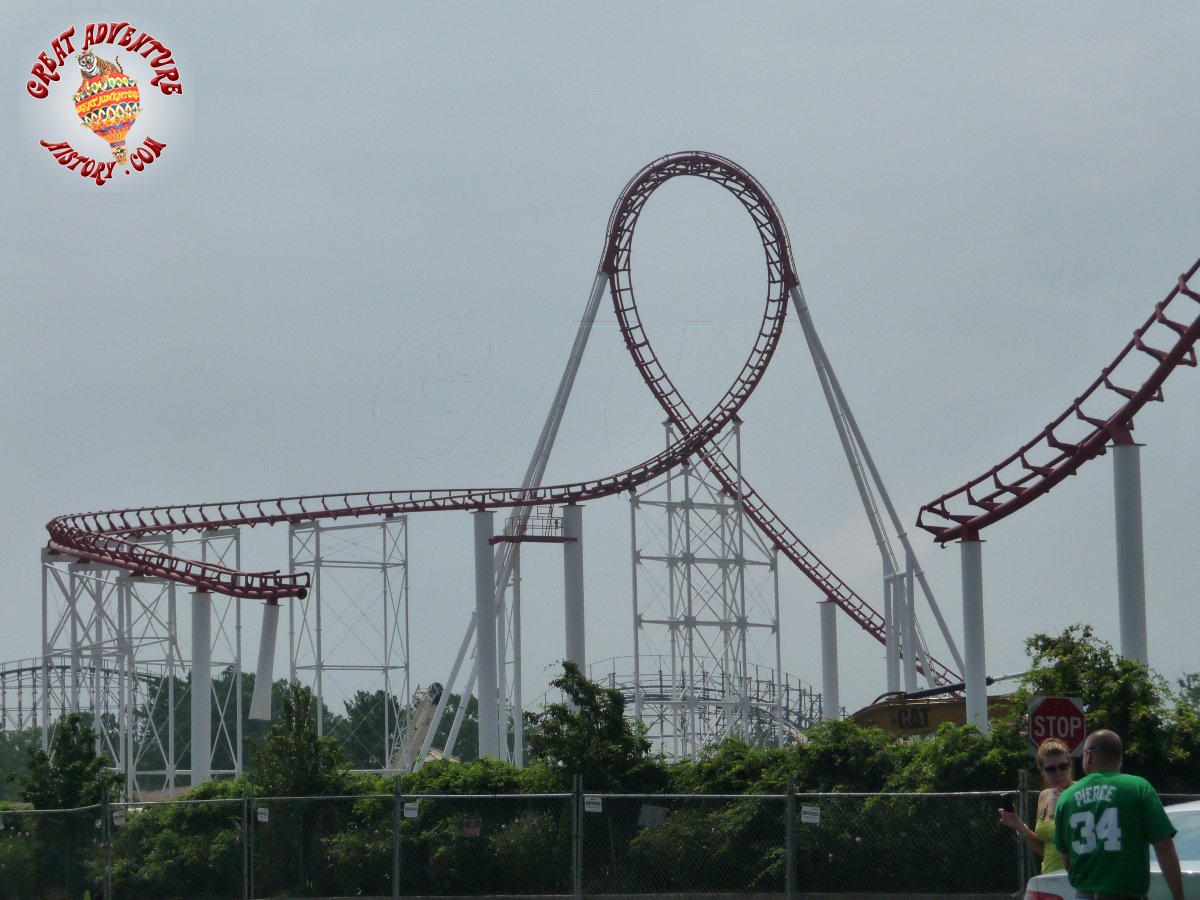
August 16th-20th:
The
highest portions of the lift and drop are now down, leaving 3
sections of track. The low section of the lift, the low section
of the drop and the 1st loop are all that remain, with clearing
of the rest of the site continuing.
Breaking up the
massive concrete footers as well as cutting the steel into small
pieces are very time consuming and happening at ground level out
of site of the general public. |
_small.jpg)
 |
| |
|
|
_small.jpg) |
_small.jpg) |
_small.jpg) |
| |
|
|
_small.jpg) |
_small.jpg) |
_small.jpg) |
| |
|
|
_small.jpg) |
_small.jpg) |
_small.jpg) |
| |
|
_small.jpg) |
_small.jpg) |
| |
|
|
 |
|
| |
|
|

















































































.jpg)


.jpg)
.jpg)


.jpg)

.jpg)
.jpg)
.jpg)
.jpg)
.jpg)
.jpg)
.jpg)
.jpg)
.jpg)
.jpg)
.jpg)
.jpg)













.jpg)
.jpg)
.jpg)
.jpg)
.jpg)
.jpg)
.jpg)
.jpg)
.jpg)
.jpg)
.jpg)
.jpg)
.jpg)
.jpg)
.jpg)
.jpg)
.jpg)
.jpg)
.jpg)
.jpg)
.jpg)
.jpg)
.jpg)
.jpg)
.jpg)
.jpg)
.jpg)
.jpg)
.jpg)
.jpg)
.jpg)
.jpg)
.jpg)
.jpg)
.jpg)
.jpg)
.jpg)
.jpg)
.jpg)
.jpg)
.jpg)
.jpg)
.jpg)
.jpg)
.jpg)
.jpg)
.jpg)
.jpg)
.jpg)
.jpg)
.jpg)
.jpg)
.jpg)
.jpg)
.jpg)
.jpg)
.jpg)
.jpg)